

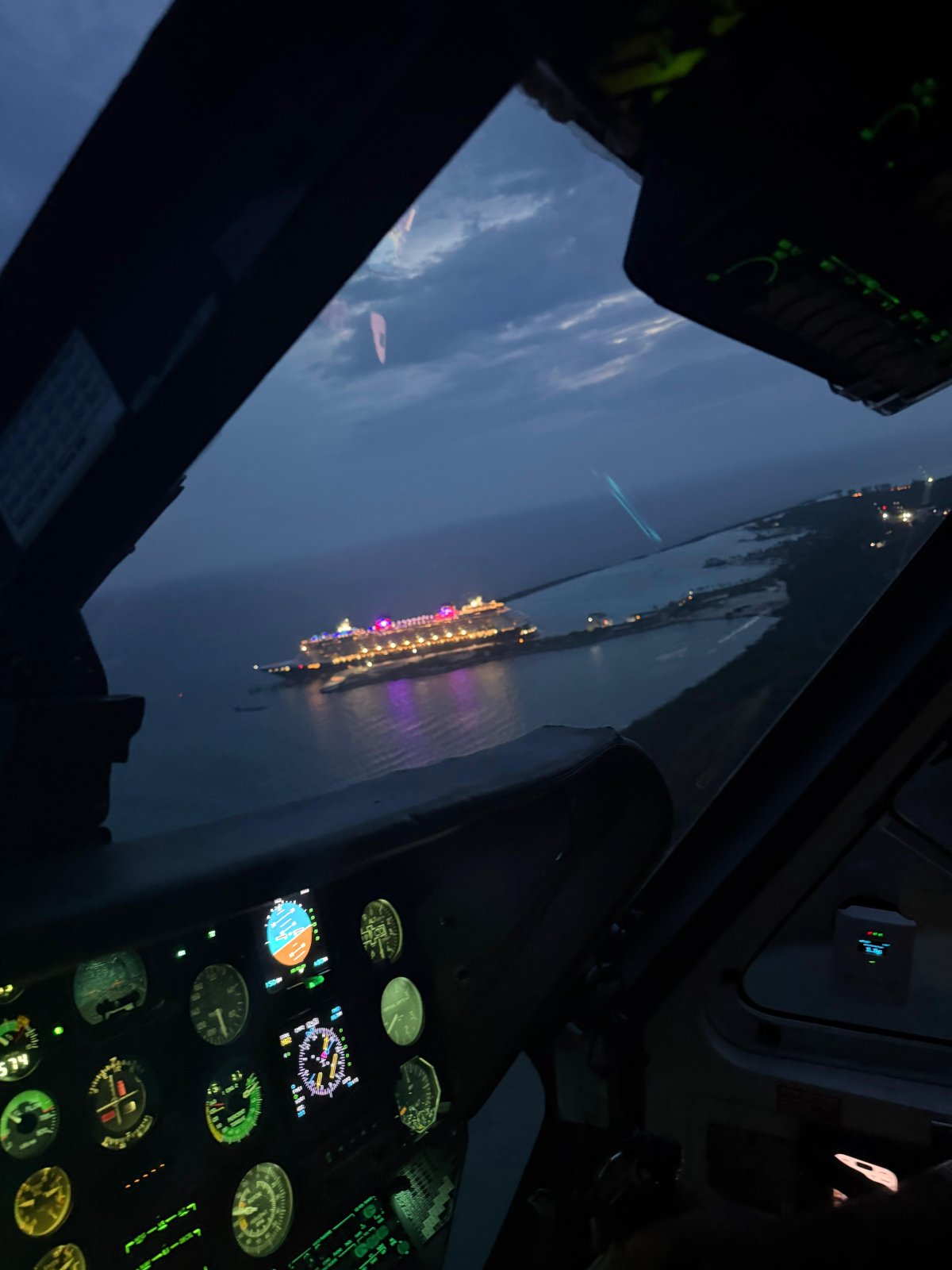
Only 61 of the over 700 islands in the Bahamas have a functional runway. If you are on a remote beach or a private vessel, the distance to a surgical suite can feel like an impossible gulf. You likely recognize that while local clinics provide essential stabilization, they aren’t equipped for complex surgical intervention. The fear of being stranded without a clear path to a U.S. hospital is a reality for many visitors and residents alike. This guide outlines the most effective emergency response for traumatic injury in Bahamas, focusing on how specialized helicopter medevac services bridge the gap between remote sites and Florida’s Level 1 trauma centers.
You’ll discover why a helicopter’s ability to land at the point of injury is superior to traditional fixed-wing options that require a functional airport. You’ll also learn how a membership model provides the logistical and financial peace of mind necessary to navigate a medical crisis with professional composure. We’ll cover the trauma evacuation process, the technical advantages of rotor-wing transport, and the steps to ensure you’re never more than a flight away from world-class care. This structured approach ensures you have a clear, actionable plan for the unexpected. “Tropic Air Rescue” of Ft Lauderdale Florida fills the gap in rapid emergency response systems in the Bahamas.
Key Takeaways
- Understand the critical “Golden Hour” for trauma survival and the necessity of immediate, specialized intervention in remote island environments.
- Learn about the Advanced Life Support (ALS) capabilities and critical care paramedics that maintain hospital-grade care during airborne transit.
- Discover why helicopter medevac is the definitive emergency response for traumatic injury in Bahamas due to its ability to land at remote scenes and private vessels.
- Gain clarity on the logistical coordination required for international evacuation to Florida Level 1 trauma centers.
- Explore how a membership model eliminates out-of-pocket costs by utilizing direct-to-insurance billing for a seamless experience.
Why the Bahamas Requires a Specialized Trauma Response
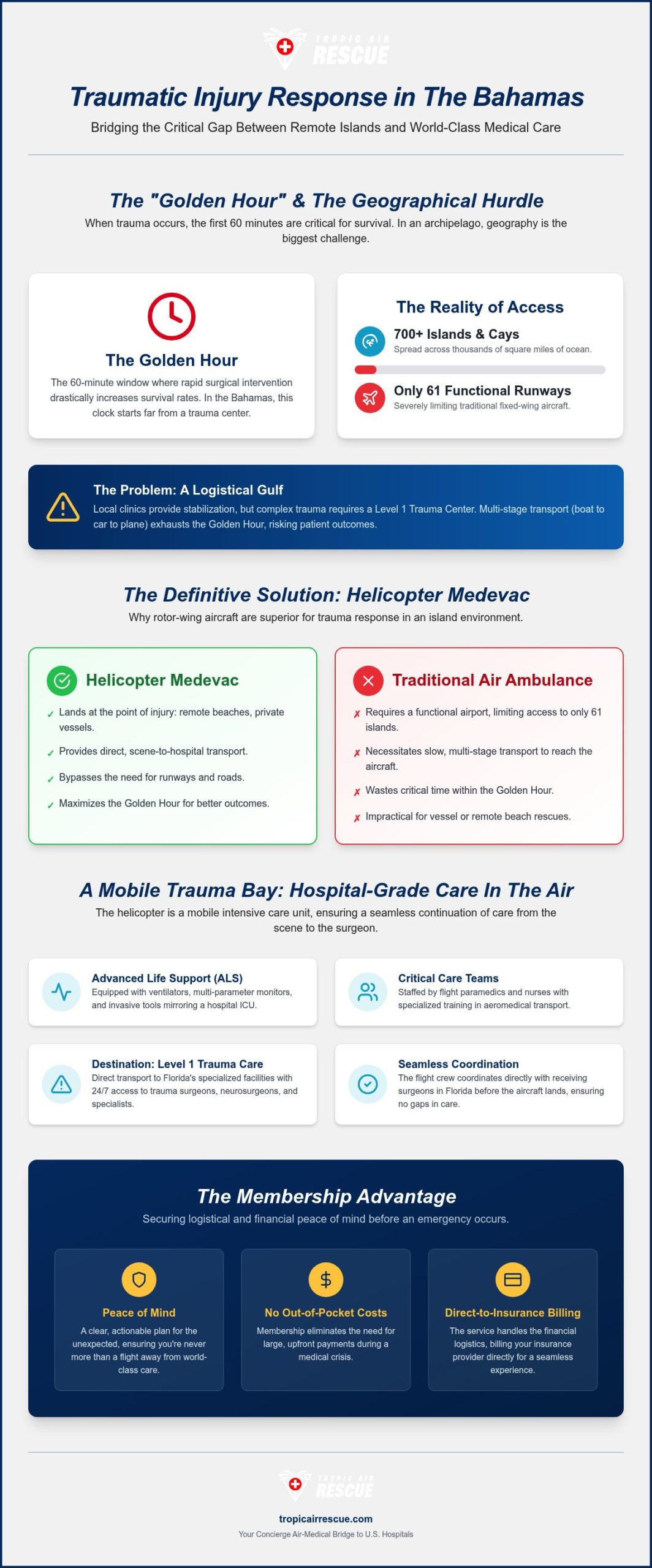
Traumatic injury in a remote island context isn’t just a medical emergency; it’s a logistical race. When a high-impact accident occurs on a secluded beach or a private vessel, the environment immediately works against the patient. Clinical outcomes depend entirely on the "Golden Hour," the critical sixty-minute window where rapid surgical intervention significantly increases survival rates. In the archipelago, an effective emergency response for traumatic injury in Bahamas must account for the fact that definitive care is often hundreds of miles away. Stabilization at a local clinic is a vital first step, but it’s rarely the final destination for trauma victims.
A concierge air-medical bridge is the only solution that addresses this geographic gap. This model doesn’t just provide transport; it provides a continuous chain of advanced clinical care from the point of injury to a trauma bay in Florida. By bypassing traditional delays, this specialized response ensures that the level of care remains consistent throughout the transit. Speed and precision are the only variables that matter when the local infrastructure cannot meet the demands of complex surgical cases.
The Reality of Island Geography and Medical Access
The Bahamas consists of over 700 islands and cays spread across thousands of square miles of ocean. Only 61 of these islands possess functional runways, which severely limits the utility of traditional aircraft. Ground ambulances are restricted by road networks that don’t exist on smaller cays, and boat transport is often too slow and subject to sea conditions. These delays increase the risk of secondary complications. When every minute counts, relying on multi-stage transport—such as a boat to a car to a plane—can exhaust the Golden Hour before the patient even leaves Bahamian airspace. A direct emergency response for traumatic injury in Bahamas requires a vehicle that can land exactly where the trauma occurred.
Defining Level 1 Trauma Care Requirements
A Level 1 Trauma Center is a specialized facility capable of providing total care for every aspect of injury, from prevention through rehabilitation. These centers maintain 24/7 availability of board-certified trauma surgeons, neurosurgeons, and orthopedic specialists. While the Public Hospitals Authority manages essential medical services and stabilization clinics across the islands, these local facilities often lack the specialized equipment and surgical depth required for multi-system trauma. Florida serves as the primary hub for this tier of care due to its proximity and the high concentration of certified trauma centers. Transitioning a patient to these facilities requires sophisticated airborne monitoring and equipment that mirrors the capabilities of a modern intensive care unit.
Advanced Life Support: Hospital-Grade Care in the Air
Hospital-grade care doesn’t stop when the patient leaves the ground. For an effective emergency response for traumatic injury in Bahamas, the helicopter must function as a mobile trauma bay. Every mission carries Advanced Life Support (ALS) equipment designed specifically for high-acuity patients. This isn’t basic first aid. It’s a sophisticated clinical environment that mirrors the capabilities of a Florida Level 1 facility. The UK government travel advice on healthcare notes that serious medical cases often require transfer to the USA via air ambulance. This transition requires more than just speed; it demands a specialized medical team capable of managing complex physiological changes during flight.
The transition from a remote island scene to a surgical suite must be seamless. There is no room for a gap in care. The medical director and flight crew coordinate directly with receiving surgeons in Florida before the aircraft even touches down. This level of preparation is standard for a concierge air-medical service. If you’re planning travel or residency, you can view our membership options to ensure this level of care is always accessible.
Onboard Medical Technology and Critical Care Teams
The fleet is equipped with multi-parameter monitors, portable ventilators, and invasive monitoring tools. These systems allow for the continuous assessment of vital signs and cardiac rhythms. ALS in helicopter transport provides a mobile intensive care unit capable of invasive monitoring and pharmacological intervention. Crew members are not general practitioners. They’re critical care paramedics and flight nurses with specific training in aeromedical physiology. They understand how altitude and vibration affect trauma. Their expertise ensures that the patient’s condition remains stable, or improves, during the transit to Florida.
Stabilization Protocols for Traumatic Injuries
Stabilization begins at the scene. The crew focuses on the immediate management of airway, breathing, and circulation. This protocol prevents secondary injuries caused by hypoxia or hypovolemia. Maintaining these professional medical flight standards is the cornerstone of a reliable emergency response for traumatic injury in Bahamas.
- Airway Management: Utilizing advanced intubation techniques and portable ventilators to ensure oxygenation.
- Circulatory Support: Administering intravenous fluids and medications to maintain blood pressure and perfusion.
- Continuous Monitoring: Using real-time data to adjust treatments mid-flight based on patient response.
Strategic Advantages of Helicopter Medevac for Trauma
Speed is not just about airspeed; it’s about proximity. Helicopters are the definitive choice for an effective emergency response for traumatic injury in Bahamas because they eliminate the logistical friction inherent in island geography. While a fixed-wing aircraft is bound by the 61 functional runways in the archipelago, a helicopter operates with tactical freedom. This versatility allows for a direct-to-clinical-care model that prioritizes the patient’s biological clock over airport availability. By removing the need for intermediate transport steps, the helicopter ensures that the Advanced Life Support environment remains uninterrupted from the scene to the trauma bay.
Landing at Remote Sites and Private Vessels
Helicopters provide point-to-point transport, which is essential when an injury occurs far from a major hub. They can touch down on resort helipads, remote beaches, or even the decks of private vessels. This capability removes the need for a double transfer where a patient must first be transported by boat or ground ambulance to meet a plane at an airport. By landing at the scene, the medical team initiates critical care immediately and transitions straight to the air. This streamlined process saves the minutes that define trauma survival. For those on the water or at private estates, this direct access is the only way to bypass the geographic barriers of the Out Islands.
Fixed-Wing vs. Helicopter: The Trauma Time Gap
Fixed-wing aircraft are efficient for a stable inter-hospital transfer where the patient is already in a controlled environment. However, for active trauma, they introduce a significant time gap. The patient must endure a bumpy ground or sea transfer to a runway, followed by a loading process that adds complexity and risk. A helicopter bypasses these steps entirely. Understanding the advantages of helicopter medevac in the Bahamas means recognizing that agility is more valuable than cruise speed during a crisis.
Within the "Ready, Agile, Direct" framework, the helicopter serves as a proactive guardian that bridges the gap between a remote injury and a Florida trauma center. The goal is to provide the fastest path to surgery, which fixed-wing logistics simply cannot match in a scene-response scenario. This direct approach is the gold standard for a modern emergency response for traumatic injury in Bahamas, ensuring that geographical isolation doesn’t dictate medical outcomes.
Coordinating Evacuation to Florida Trauma Centers
International medical evacuation is a complex operation that begins long before the helicopter leaves the ground. It requires simultaneous logistical and clinical management to ensure a seamless transition between jurisdictions. While the medical crew focuses on stabilization, a dedicated ground team coordinates with U.S. Customs and Border Protection and the receiving facility. This proactive approach ensures that the "Golden Hour" isn’t wasted on administrative delays at the border. The Medical Director selects the Florida trauma center based on the specific injury profile, matching the patient with the most appropriate surgical specialists. This high-level oversight is the backbone of an elite emergency response for traumatic injury in Bahamas.
Seamless Logistics and International Repatriation
Navigating customs and immigration during a medical crisis requires established protocols and deep professional relationships. Our team manages all necessary documentation and clearance procedures mid-flight, allowing the patient to bypass standard entry queues. These established relationships with U.S. trauma facilities ensure that a surgical team is briefed and waiting upon arrival. Precise clinical hand-overs between our flight crew and hospital staff reduce the risk of information loss or hand-off errors during the transition. This level of coordination is a hallmark of a concierge air-medical service, providing a disciplined path from a remote scene to a definitive care environment.
Direct Insurance Billing and Membership Benefits
Financial barriers often create dangerous delays in emergency situations. For non-members, the requirement for significant upfront payments can stall a dispatch. Membership removes this hurdle entirely. By maintaining an active membership, you ensure that the focus remains on the medical response rather than financial logistics. We utilize a direct-to-insurance billing model that eliminates out-of-pocket costs for members, handling the complex reimbursement process on your behalf. This is especially critical for trauma air transport Bahamas missions where every second counts. Pre-certification through membership allows our dispatch team to launch an aircraft immediately without waiting for financial clearance. To secure this level of protection for yourself or your family, you can apply for a membership plan today.
Securing Your Emergency Response: The Membership Advantage
Membership isn’t just a financial tool; it’s a pre-authorized green light for life-saving logistics. In a crisis, the most effective emergency response for traumatic injury in Bahamas is one that is already standing by. Membership eliminates the friction of upfront payments and insurance verification at the moment of impact. It transforms a complex international evacuation into a streamlined, concierge operation. By securing coverage in advance, you ensure that our dispatch team and medical crews can focus exclusively on clinical outcomes rather than administrative hurdles. This proactive preparation is the difference between a delayed response and an immediate launch.
Short-Term vs. Annual Coverage Options
Coverage must match your operational profile to be effective. For seasonal visitors or those on a single excursion, short term medevac coverage provides targeted protection during your stay. This is the ideal solution for yacht charters or brief resort vacations where the risk is temporary but the need for safety is absolute. Conversely, second-home owners and frequent mariners benefit from an annual air rescue membership. This year-round security ensures that your emergency response for traumatic injury in Bahamas is always active, regardless of how often you cross the Gulf Stream. Both tiers utilize our direct-to-insurance billing model to minimize out-of-pocket exposure and simplify the recovery process.
Emergency Activation and Response Readiness
Activating a rescue is a disciplined, methodical process designed for maximum speed. When a trauma incident occurs, the member or their representative contacts our dispatch center immediately. You’ll need to provide the precise location, such as a resort name, GPS coordinates for a vessel, or a private estate address, along with a brief description of the injuries. Our medical director reviews the case in real-time while the flight crew prepares for immediate launch. This rapid response is supported by our established protocols with Florida trauma centers, ensuring the bridge to care is open before the rotors even start turning.
Peace of mind comes from knowing an elite guardian is always on watch. This service isn’t a generic utility; it’s a specialized partnership for those who value meticulous preparedness and professional composure. We handle the technical complexities of aviation, the clinical demands of trauma care, and the logistical challenges of international borders. You simply focus on your safety while we manage the rest. This proactive approach defines the concierge standard of care, providing the definitive solution for those navigating the beautiful but remote geography of the Bahamas.
Securing the Golden Hour: Your Path to Definitive Care
Survival in a remote island environment depends on the speed and quality of the medical bridge you establish before a crisis occurs. Traditional logistics often fail in the Out Islands, where limited infrastructure can delay critical intervention. By choosing a helicopter-based emergency response for traumatic injury in Bahamas, you ensure direct access to Florida Level 1 trauma centers without the delays of double transfers. Our ALS-equipped helicopter fleet maintains hospital-grade standards from the moment of scene arrival to the clinical hand-off.
Membership removes the administrative and financial friction that can stall a life-saving launch. You gain the advantage of direct-to-insurance billing, ensuring no out-of-pocket costs for members during an evacuation. This elite, concierge level of preparation provides the peace of mind necessary to navigate the archipelago with absolute confidence. Don’t leave your safety to chance in an isolated environment. Secure your Bahamas air medical membership today and ensure you’re always prepared for the unexpected. Your safety is our primary mission.
Frequently Asked Questions
What qualifies as a traumatic injury requiring medevac?
A traumatic injury requiring an emergency response for traumatic injury in Bahamas includes any high-acuity event where local stabilization is insufficient for definitive care. This encompasses severe blunt force trauma, penetrating injuries, complex fractures, and neurological emergencies. When the "Golden Hour" is at risk, the medical director authorizes an immediate launch. The goal is to provide a seamless transition to a Level 1 trauma center where specialized surgical intervention is available 24/7.
How quickly can a helicopter reach a remote island in the Bahamas?
Launch times are immediate following medical clearance, with the aircraft flying directly to your coordinates. Because helicopters land at the point of injury, they bypass the logistical delays of ground ambulances and boat transfers. This streamlined process is critical for a rapid emergency response for traumatic injury in Bahamas. The total transit time depends on your distance from the flight base, but the elimination of secondary transport steps significantly reduces the overall window to definitive care.
Does standard travel insurance cover helicopter evacuation to Florida?
Standard travel insurance policies often include evacuation coverage, but they frequently operate on a reimbursement basis. This can lead to a "reimbursement trap" where patients must provide significant upfront funds before an aircraft is dispatched. Tropic Air Rescue members avoid this hurdle. The company coordinates directly with your health insurer and accepts their reimbursement as full payment. This process ensures that financial verification never delays a life-saving flight to a Florida trauma center.
Can a helicopter land on a private yacht for an emergency?
Yes, the fleet is capable of landing on private yacht decks that meet safety and weight specifications. If a vessel does not have a suitable landing pad, the helicopter can coordinate a meeting point or use a hoist if equipped. This point-to-point capability is a major strategic advantage in the archipelago. It allows the medical team to initiate Advanced Life Support directly at the scene, bypassing the need for a boat-to-shore transfer.
What happens if I need care but am not a member?
Non-members typically face significant operational delays because private air medical services often require financial clearance or upfront payments before launching. These administrative hurdles can consume the critical window for trauma survival. Members are pre-cleared, allowing for an immediate response without the need for credit card authorizations or insurance pre-approvals. Membership ensures that the focus remains entirely on clinical stabilization and rapid transport to a higher level of care in Florida.
Why is a helicopter faster than a fixed-wing plane for trauma?
Helicopters are faster because they eliminate the "double transfer" required by other aircraft. Fixed-wing transport requires a patient to be moved by ground or boat to one of the 61 functional runways in the islands. This adds multiple loading and unloading steps, wasting precious time. A helicopter lands at the scene, provides hospital-grade care immediately, and flies directly to the destination hospital. This agility is the gold standard for trauma survival.
How is the destination hospital in Florida chosen?
The destination is selected by the Medical Director based on the specific clinical requirements of the patient. Factors include the type of trauma, the need for specific specialists like neurosurgeons or cardiac surgeons, and the current capacity of Florida Level 1 Trauma Centers. This high-level coordination ensures that the patient is delivered to the facility best equipped to handle their specific injuries. It is a key component of a managed, concierge medical evacuation process.
Are there any out-of-pocket costs for Tropic Air Rescue members?
No, members incur no out-of-pocket costs for emergency transports. Tropic Air Rescue utilizes a direct-to-insurance billing model where the company bills your health insurance provider directly. They accept the insurance payout as payment in full for the mission. This eliminates the stress of medical debt during a crisis. It also ensures that members never receive a direct invoice for the transport, providing both physical and financial security during a medical emergency.
www.tropicairrescue.com