

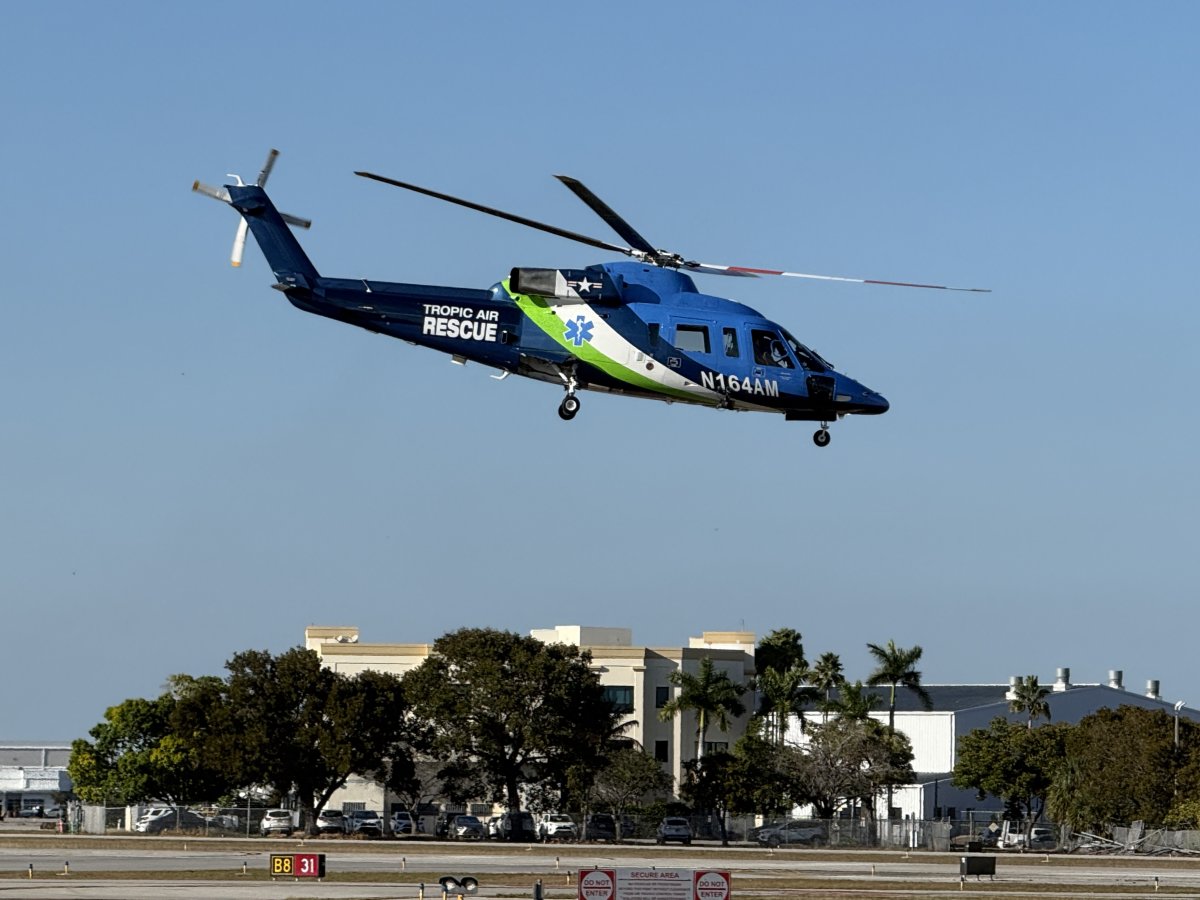
Your premium travel insurance is likely a $100,000 liability waiting to happen during a Bahamas medical emergency. Most standard policies offer limited evacuation caps that fail to cover the true cost of private air ambulances, especially when specialized rotor-wing access is required for remote islands. Choosing the right short term medevac coverage is the only way to bridge this gap and ensure you aren’t forced to manage life-altering logistics while in a state of crisis.
You value precision and preparedness in every aspect of your travel. We address the fear of inadequate local facilities by providing a direct link to a specialized medical fleet and elite critical care professionals. This guide outlines how to eliminate out-of-pocket costs at the point of service and secure a guaranteed transfer to Florida trauma centers. You will discover why a membership model provides the “always ready” composure required for high-stakes island travel in 2026.
Key Takeaways
- Identify the “adequate facility” trap in standard travel insurance that can leave you stranded in local clinics instead of Florida trauma centers.
- Secure precise logistical protection by selecting short term medevac coverage tailored specifically to your itinerary length and remote island destination.
- Leverage the versatility of point-to-point helicopter extraction to bypass the limitations of island runways and fixed-wing aircraft.
- Eliminate the financial risk of $100,000 emergency flights through membership plans that offer direct insurance billing and zero out-of-pocket costs.
- Verify provider credentials by distinguishing between elite aircraft owners and medical brokers to ensure immediate, specialized response readiness.
Why Standard Travel Insurance Fails in Remote Island Emergencies
Standard travel insurance is designed for lost luggage and minor clinic visits, not life-threatening trauma on a remote cay. Short term medevac coverage serves as a dedicated medical extraction service tailored to the specific duration of your stay. It bridges the gap between basic financial reimbursement and the high-stakes logistics of a medical rescue. In the Bahamas, where advanced care is concentrated in specific hubs, the most critical metric is “time-to-care.” Waiting for an insurance adjuster to approve a flight can be a fatal delay. You need a solution that prioritizes clinical outcomes over bureaucratic checklists.
Beyond medical emergencies, travelers should also prepare for airline-related disruptions that standard insurance may not fully resolve; to protect your rights during flight delays or cancellations, you can visit Airflix.
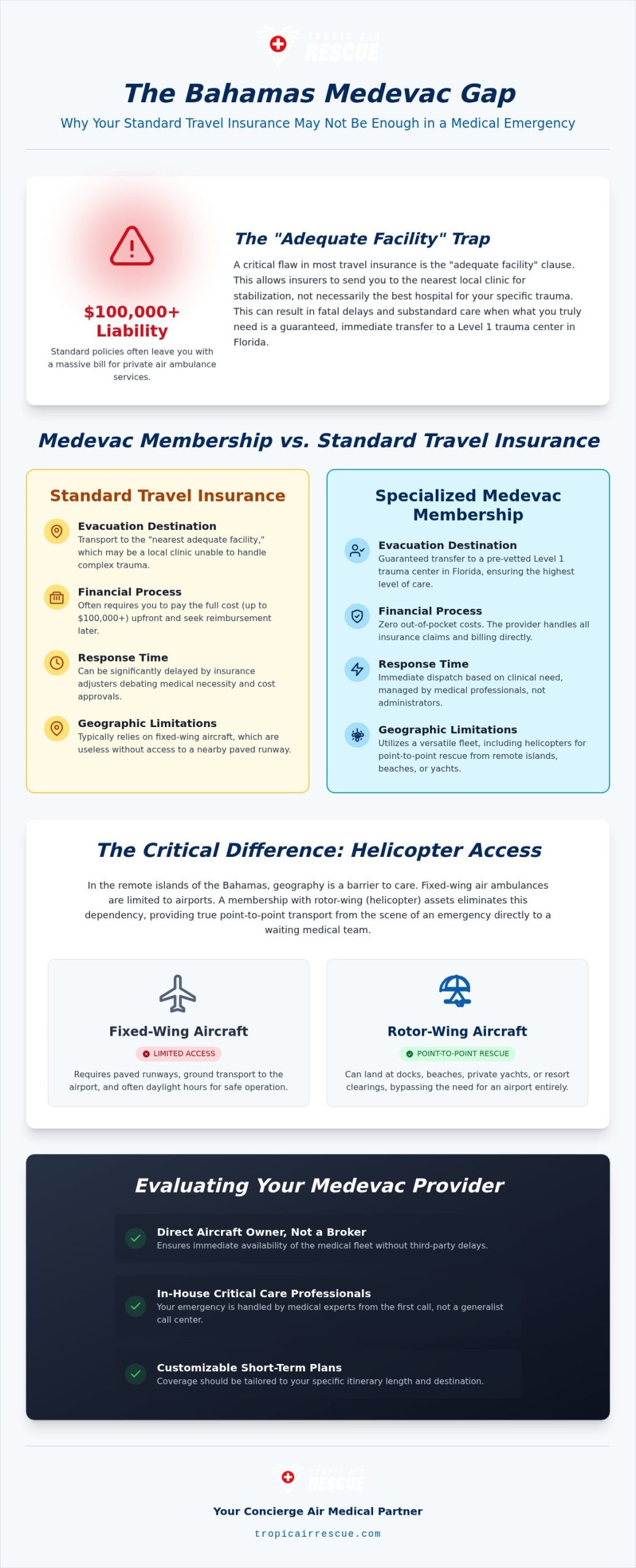
Most travelers fall into the “Adequate Facility” trap. This common policy language allows insurers to transport you to the nearest hospital deemed sufficient for stabilization. In remote islands, that might be a small regional clinic lacking specialized equipment or trauma surgeons. You don’t want to be stabilized in a facility that cannot perform surgery. You want a guaranteed transfer to a facility capable of managing your specific emergency. Modern Air medical services require more than just a flight; they require a pre-coordinated clinical pathway to a Level 1 trauma center in Florida.
The Gap Between Coverage and Coordination
Standard policies often operate on an indemnity basis. You are expected to source a private air ambulance, pay a massive fee upfront, and seek reimbursement months later. This process is a logistical nightmare to manage during a medical crisis. Third-party adjusters can spend hours debating medical necessity while your clinical window closes. A specialized membership manages the aviation and medical logistics simultaneously. We focus on launching assets based on clinical need rather than administrative approval. This ensures that your care is coordinated by experts, not generalist call center staff.
Geography as a Barrier to Care
The Bahamas presents unique logistical hurdles that standard insurance cannot solve. Fixed-wing air ambulances require paved runways and often require daylight hours for safe operation. If you are on a private yacht or at a remote resort, you are effectively isolated from fixed-wing support. Short term medevac coverage that utilizes rotor-wing assets eliminates the need for an airport. Helicopters land at docks, beaches, or clearings, providing point-to-point transport that fixed-wing planes cannot match. Short-term travel doesn’t mean low-stakes risk. The lack of local infrastructure makes immediate medical readiness your most important travel asset.
The Mechanics of Short-Term Medevac Coverage: Membership vs. Insurance
Distinguishing between an indemnity policy and a membership model is critical for island safety. Standard insurance is a financial safety net; a membership is an operational lifeline. While the CDC guide to travel insurance highlights the importance of medical evacuation, it often leaves the logistical burden on the traveler. A medical evacuation membership functions as a concierge layer. It provides immediate access to a medical fleet without the delays of insurance adjudication. You aren’t just buying a policy; you are securing a dedicated response team.
The membership model prioritizes readiness and professional composure. You pay for the certainty of 24/7 dispatch and specialized medical coordination. In a crisis, you shouldn’t be negotiating with a broker or a generalist call center. You need an elite team that manages the flight, the paramedics, and the hospital transfer seamlessly. This proactive approach ensures that medical decisions are made by clinicians rather than adjusters. It transforms a chaotic emergency into a disciplined medical operation.
Eliminating Financial Friction
Direct billing is the specialized process where the provider manages all insurance paperwork and claims directly with your health insurer on your behalf. This eliminates the need for members to pay tens of thousands of dollars upfront. Unlike traditional travel insurance which relies on a slow reimbursement process, a membership ensures direct payment at the point of service. Your membership fee secures your right to immediate dispatch. It bypasses the financial pre-approval hurdles that often stall critical transport. You can view membership options to see how this proactive approach removes the burden of emergency financing.
Customizing Coverage for Your Stay
Short term medevac coverage is specifically designed to align with your trip duration. You can secure elite protection for 7-day, 14-day, or 30-day itineraries without the expense of an annual commitment. These plans are the most cost-effective solution for seasonal visitors to the Bahamas. Activation is efficient and streamlined. Your coverage becomes live before your wheels touch the tarmac, ensuring you are protected from the moment you arrive. This precision allows you to focus on your travel while we maintain operational readiness for your safety.
Helicopter Access: The Critical Difference in Short-Term Air Rescue
The logistical reality of the Bahamas demands specialized equipment that exceeds the capabilities of standard air ambulances. Most generic plans rely on fixed-wing aircraft, which are inherently tethered to paved runways and airport operating hours. Securing short term medevac coverage that includes rotor-wing access is the only way to ensure point-to-point transport. While the CDC guide to medical evacuation insurance emphasizes the high costs of these services, it doesn’t account for the tactical advantages of helicopters in archipelagic environments. A helicopter brings the ICU directly to the patient, bypassing the delays of ground transport and ferry transfers.
Helicopters represent the gold standard for inter-island transfers and direct trauma center transport. They provide a level of versatility that fixed-wing planes cannot match. Whether you are at a secluded resort, a private dock, or a remote clearing, a helicopter can land within meters of your location. This “point-to-point” benefit is not just a convenience; it is a clinical necessity during the “golden hour” of trauma care. Rapid extraction from the site of injury directly to a specialized facility in Florida saves lives by eliminating every unnecessary transition in the care chain.
Bypassing the Runway Requirement
Island airports often have restrictive operating hours and limited runway lengths that can ground fixed-wing aircraft, especially after sunset. A helicopter eliminates these barriers entirely. It removes the need for a grueling ground ambulance leg, which can take hours on congested or poorly maintained island roads. For yacht owners and maritime travelers, the advantage is even more pronounced. Medical extraction can occur directly from or near the vessel, ensuring that a cardiac or trauma event at sea doesn’t result in a logistical stalemate at a distant port.
High-Acuity Care at High Speed
The interior of a specialized rescue helicopter is a high-tech medical environment designed for stability and speed. These aircraft are equipped with advanced life support (ALS) systems, including ventilators, multi-parameter cardiac monitors, and specialized trauma kits. This equipment allows flight nurses and critical care paramedics to maintain ICU-level care during the transit to Florida. Every flight is a disciplined medical operation. Advanced avionics and weather-radar systems allow for safe, precise transport through the complex and rapidly changing weather patterns typical of the Caribbean islands.
Evaluating Your Needs: A Checklist for Short-Term Medical Evacuation Plans
Selecting short term medevac coverage requires a rigorous technical audit of the provider. You aren’t just buying a policy; you are choosing a logistical partner for a potential life-or-death scenario. The first step is to verify fleet ownership. Many companies operate as brokers, meaning they don’t own the aircraft or employ the medical staff. This adds a dangerous layer of coordination and delay during a crisis. An elite provider owns the assets, controls the maintenance schedule, and ensures that the flight crew is trained to specific inter-hospital trauma transfer protocols.
The billing structure is the second critical factor. You must confirm that the provider offers a true “no out-of-pocket” experience for members. In 2024, air ambulance providers won 87% of Independent Dispute Resolution (IDR) cases, highlighting the complexity of insurance negotiations in this sector. You don’t want to be the one negotiating these technicalities from a hospital bed. A membership should include direct billing to your health insurer, where the provider handles all the administrative friction. Understanding how no out-of-pocket air ambulance membership billing works ensures your focus remains on recovery, not financing.
The ‘Fine Print’ of Medevac Plans
Examine the destination protocols carefully. Many standard plans only guarantee transport to the “nearest adequate facility.” In the Bahamas, this could mean staying in a local clinic that lacks specialized trauma capabilities. Elite short term medevac coverage guarantees transfer to a US trauma center, typically in Florida, where advanced care is certain. You should also verify if the plan includes a dedicated concierge for family coordination. Managing the logistics for your loved ones is just as important as the medical flight itself.
This dedication to seamless logistics is also essential in the management of high-end travel accommodations; for an example of how luxury villas and boutique hotels are professionally overseen to ensure guest satisfaction, you can learn more about Crucial Hospitality.
Logistics and Coordination Standards
Speed of dispatch is the ultimate metric. Ask for the average launch time and the provider’s specific coordination protocols with Florida hospital admissions. A disciplined operation will have pre-established relationships with trauma centers to ensure a seamless “bed-to-bed” transition. These standards should also extend to specialized services like organ transport or medical repatriation. If you are ready to secure a higher standard of island safety, you can apply for a short-term membership today. Expert preparation is the only way to ensure a professional response when minutes count.
Geographic specialty is the final checklist item. A provider with local expertise in the Bahamas understands the nuances of island weather and remote landing zones. This specialized knowledge, combined with the legislative stability provided by the RESCUE Act of 2026, ensures that your provider is equipped for the unique challenges of 2026 island travel. Secure a partner that views your safety as a disciplined mission rather than a generic service.
Tropic Air Rescue: Your Concierge Air Medical Partner
Tropic Air Rescue stands as the definitive partner for travelers seeking elite medical extraction in the Bahamas. We specialize in providing short term medevac coverage that prioritizes speed, clinical precision, and logistical excellence. Our operation is built around a specialized helicopter fleet designed specifically for the unique geography of the archipelago. This allows for direct extraction from remote resorts and private vessels, ensuring a seamless transition from an island emergency to a Florida trauma center. We maintain a zero out-of-pocket commitment for our members by utilizing a sophisticated direct insurance billing system. You focus on recovery; we manage the financial and operational complexity.
Our role as a high-end guardian is defined by our ability to execute missions that others cannot. By operating our own fleet, we eliminate the delays inherent in brokerage models. This “always ready” posture is critical when managing the high-stakes urgency of cardiac events or traumatic injuries. We don’t just provide a flight; we provide a disciplined clinical pathway. This comprehensive approach ensures that every member receives a concierge level of care that bridges the gap between remote island isolation and world-class medical facilities.
Elite Membership Benefits
We offer tailored short-term plans that match the specific itineraries of tourists, yacht owners, and seasonal residents. These memberships provide immediate access to a 24/7 medical aviation team. Enrollment takes only minutes and can be completed online before your next island departure. This proactive step secures a level of protection that standard travel policies simply cannot match. You gain the peace of mind that comes with knowing a specialized rescue team is on standby for your specific trip dates. Our short term medevac coverage is the most efficient way to ensure your safety is never left to chance.
Proven Expertise in Inter-Hospital Transfers
Our team excels in coordinating complex inter-hospital transfer services to leading trauma facilities in Florida. The technical edge of our service lies in our advanced life-support equipment. Every aircraft functions as a mobile ICU, staffed by critical care paramedics and nurses trained for high-acuity transit. We ensure that the level of clinical care remains consistent from the moment of pickup through the final hospital admission. This logistical coordination includes managing all communications with receiving physicians and trauma surgeons. Secure your Short-Term Medevac Membership for the Bahamas to ensure your safety is managed by the region’s premier air medical partner.
In the evolving landscape of 2026 travel, professional composure and meticulous preparedness are your best assets. Tropic Air Rescue remains the bold leader in Bahamas medical aviation, providing the definitive solution for complex logistical challenges. We value exclusivity and proactive safety, ensuring that our members are never alone in a crisis. Secure your membership today and travel with the confidence that an elite medical fleet is always within reach.
Operationalize Your Emergency Response Strategy
Island travel in the Bahamas demands a level of logistical precision that standard insurance cannot provide. You now understand why standard policies often fail at the “last mile” of remote geography and why point-to-point helicopter access remains the definitive solution for trauma. Securing short term medevac coverage isn’t merely a financial decision; it’s an investment in elite operational readiness. It ensures that your medical extraction is handled by professionals who own the assets and control the timeline.
Our Advanced Life Support (ALS) equipped fleet is designed to bring the ICU to your location, regardless of runway limitations. We eliminate the financial friction of private air ambulances through a direct billing model that removes out-of-pocket costs for members. You deserve a concierge partner that manages every medical and aviation detail with professional composure. Don’t wait for a crisis to test your emergency plan. Secure your safety before you depart for your next island destination.
Enroll in a Short-Term Medevac Membership Today and ensure you have an authoritative guardian ready for any high-stakes scenario. Travel with the confidence that expert care is always within reach.
Frequently Asked Questions
What is the difference between travel insurance and medevac coverage?
Travel insurance is primarily a financial indemnity policy designed to reimburse you for losses like trip cancellations or minor medical bills. Medevac coverage, specifically through a membership model, is a logistical service that manages the actual extraction and medical transport. While insurance often only pays for transport to the “nearest adequate facility,” a membership ensures you reach a specialized US trauma center.
Does short-term medevac coverage include transport back to the United States?
Elite short term medevac coverage specifically includes guaranteed transport to Florida trauma centers. This ensures you bypass the limitations of local island clinics and receive care at a facility capable of managing high-acuity cases. Our coordination team manages the entire cross-border transition and hospital admission process to ensure a seamless “bed-to-bed” transfer.
How much does a private air ambulance cost without membership?
Research indicates that international air ambulance flights can exceed $200,000 when arranged without a membership. Helicopter base rates typically range from $8,000 to $15,000, with additional per-mile charges between $150 and $300. These fees are usually demanded as an upfront payment before the aircraft is permitted to launch.
Can a medevac helicopter land on a private yacht or remote beach?
Helicopters possess the unique ability to land at remote resorts, beaches, or docks near a private yacht. This point-to-point versatility is the primary advantage over fixed-wing aircraft, which are restricted to paved runways. It eliminates the need for a grueling ground ambulance leg and ensures rapid extraction from areas where traditional airports are unavailable.
Will my current health insurance pay for an international air ambulance?
Most standard health insurance policies offer negligible coverage for international air medical transport. In the rare cases where coverage is provided, the patient is almost always responsible for the massive upfront cost. A membership solves this by handling direct billing to health insurers, removing the financial and administrative burden from the member during a crisis.
Is there a waiting period for short-term medevac memberships?
Short term medevac coverage activation is designed to be efficient and is typically live before your wheels touch the tarmac. You must enroll before a medical emergency occurs to ensure your data is in our dispatch system. This allows our medical team to initiate immediate coordination the moment a request for transport is received.
What medical equipment is available on a Tropic Air Rescue flight?
Our aircraft are outfitted with Advanced Life Support (ALS) equipment, including multi-parameter cardiac monitors and ventilators. Every flight functions as a mobile ICU designed for critical care transport. This technical edge allows our flight nurses and paramedics to maintain patient stability during high-speed transit to specialized Florida facilities.
Does short-term coverage apply to all family members on a trip?
Membership plans can be customized to include individual travelers or entire families. Every person on your itinerary must be registered under the plan to guarantee a professional response for all party members. This structured approach is a key component of a disciplined safety strategy for high-stakes island travel.