

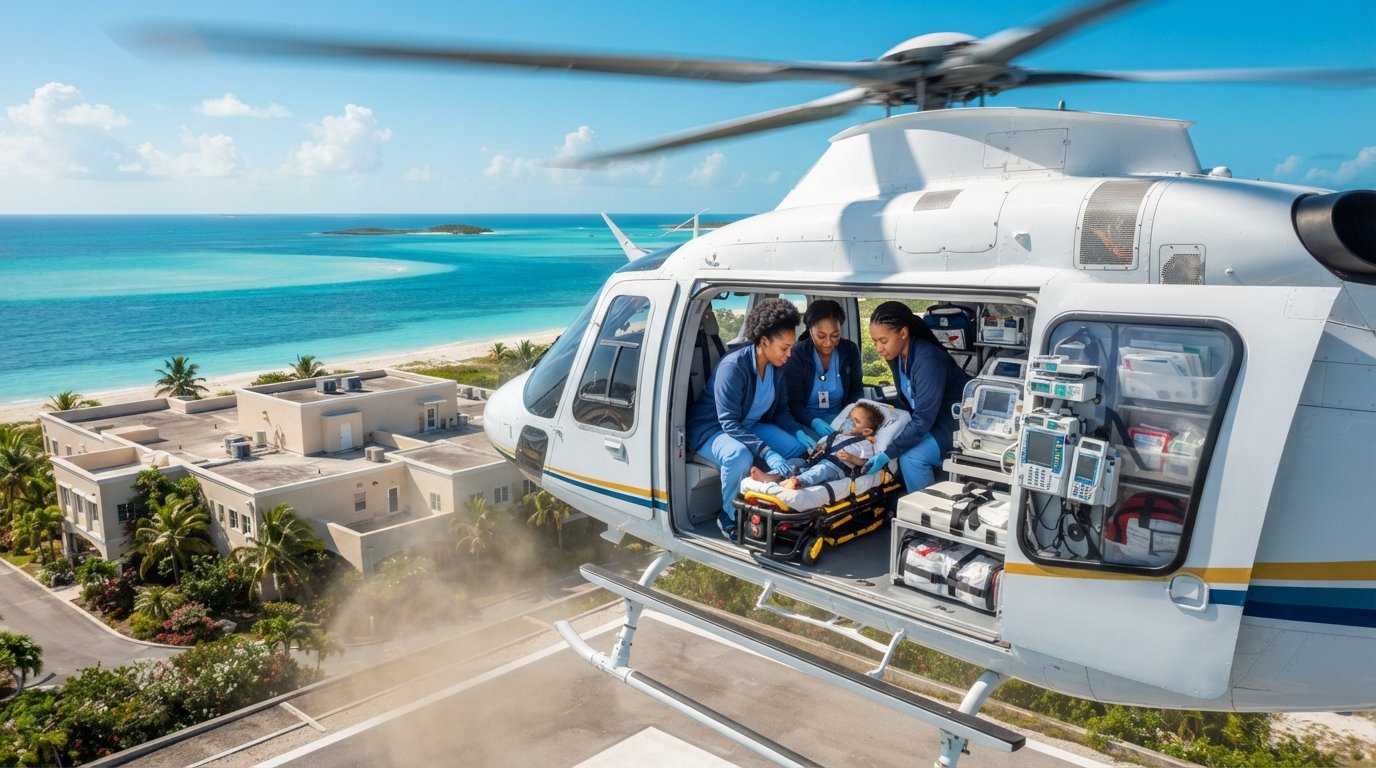
A pediatric medical emergency on a remote island is not the time to discover that standard air transport isn’t equipped for a child’s unique physiology. Securing a pediatric emergency medevac membership Bahamas families trust ensures that when a child’s life depends on a transfer, the response is elite and specialized. You shouldn’t have to worry about whether an aircraft carries neonatal incubators or if the crew can manage a pediatric airway in transit. In high-stakes scenarios, the difference between basic transport and a flying intensive care unit is absolute.
We’ll show you how specialized pediatric air medical transport ensures the highest level of care for children during critical island-to-hospital transfers. This article details the 2026 standards for helicopter-based NICU and PICU care, the protocols for seamless admission into US trauma centers, and the financial peace of mind that comes with direct insurance billing. You’ll learn why helicopter versatility is the definitive solution for rapid, bedside-to-bedside pediatric recovery and how to eliminate the risk of logistical delays or unexpected out-of-pocket costs.
Key Takeaways
- Pediatric air medical transport operates as a mobile NICU/PICU, utilizing specialized equipment like pediatric ventilators and infusion pumps to maintain critical care standards during flight.
- Helicopter versatility is the definitive solution for island logistics, providing direct bedside-to-bedside transport and bypassing the delays associated with fixed-wing runway requirements.
- A pediatric emergency medevac membership Bahamas ensures immediate asset deployment and total financial protection through direct insurance billing for all members.
- Successful inter-hospital transfers to US trauma centers require meticulous coordination of clinical protocols and international customs clearance to ensure zero-delay arrivals.
- Tiered membership options for residents and short-term visitors provide elite, concierge-level medical security that is always prepared for high-stakes pediatric emergencies.
Defining Pediatric Air Ambulance Services and Medical Necessity
Pediatric air ambulance services are a highly specialized branch of air medical services specifically engineered for neonates, infants, and children. These flights are not simply standard transport missions with smaller stretchers. They represent a sophisticated clinical environment where every piece of equipment and every protocol is calibrated for a child’s unique biology. Clinical necessity for such a service arises when a child’s medical condition exceeds the diagnostic or therapeutic capabilities of local island facilities. In the Bahamas, where remote islands may lack advanced pediatric specialists, rapid aerial transfer is often the only viable path to recovery.
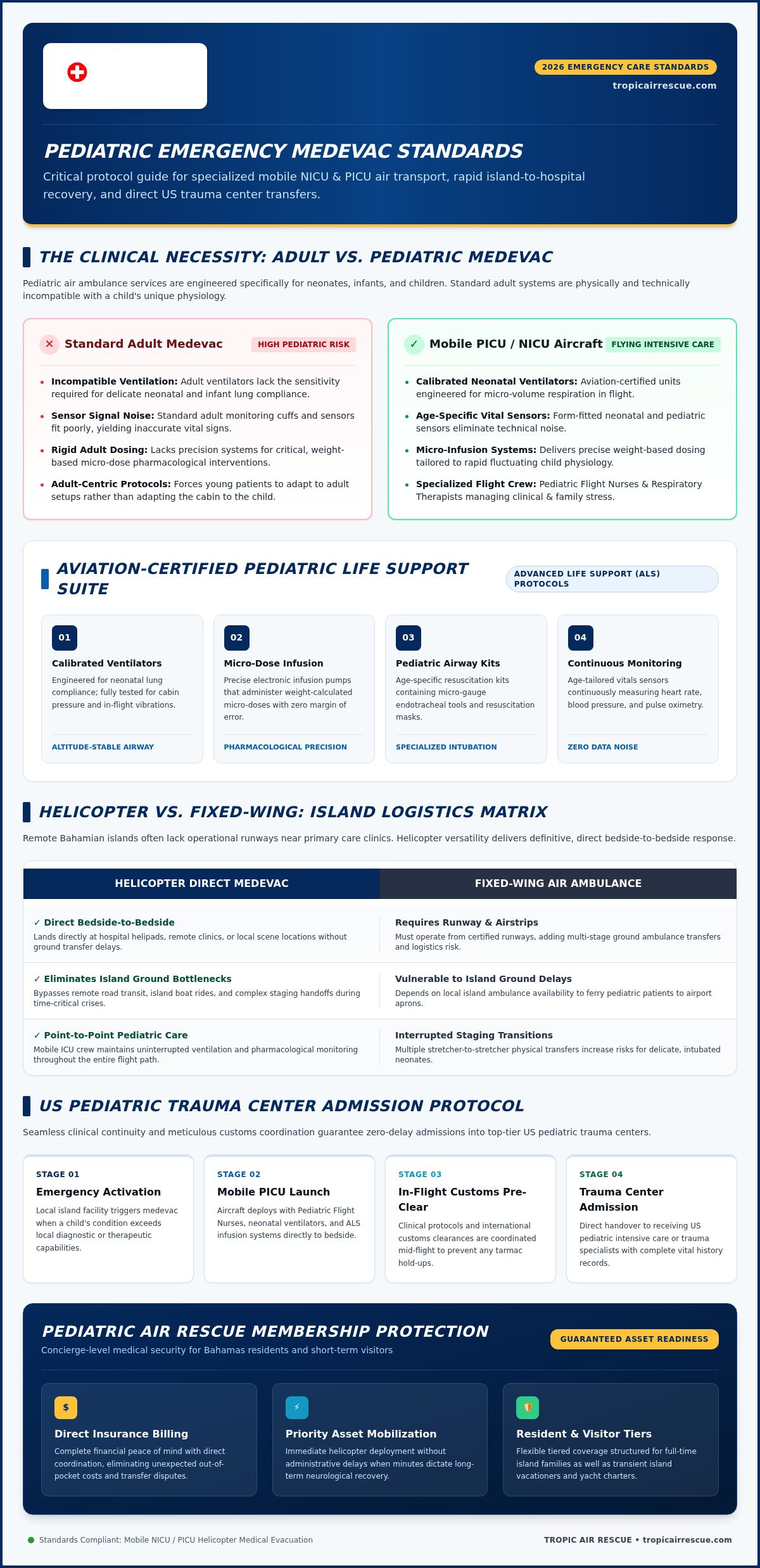
Pediatric medevac is a mobile intensive care unit tailored for young patients. Standard adult medevac equipment is often physically and technically incompatible with pediatric needs; for example, adult ventilators lack the sensitivity required for neonatal lungs, and standard monitoring sensors cannot provide accurate data on small infants. Using adult-grade equipment in a pediatric crisis introduces unnecessary risk. True pediatric transport ensures that the medical environment adapts to the patient, rather than forcing the patient to fit adult-centric systems.
The Difference Between Pediatric and Adult Medevac
Physiological differences between children and adults require specialized monitoring and medication dosing. A child’s heart rate and blood pressure fluctuate differently under stress, necessitating precise, weight-based calculations for every intervention. Securing a pediatric emergency medevac membership Bahamas provides access to a crew specifically trained in these nuances. These teams typically include Pediatric Flight Nurses and respiratory therapists who understand the complexities of pediatric care. Beyond the clinical, these experts manage the psychological environment, maintaining a composed atmosphere to reduce anxiety for both the child and the parents during high-stakes transfers.
When Is Pediatric Transport Required?
Clinical triggers for pediatric transport include critical trauma or neurological emergencies that demand the resources of a specialized center. Acute respiratory distress, often stemming from infections or congenital conditions, also necessitates immediate intervention that local clinics cannot provide. Inter-hospital transfers are another common requirement, moving a stabilized child from a primary care setting to a facility equipped for long-term specialized treatment. In each scenario, the goal is a seamless transition that maintains the continuum of care from the moment of pickup to hospital admission.
Clinical Requirements for Specialized Pediatric Life Support
Replicating a Neonatal Intensive Care Unit (NICU) or Pediatric Intensive Care Unit (PICU) within an aircraft cabin requires more than just scaling down equipment. It demands a suite of aviation-certified medical technology that remains fully operational during pressure and altitude changes. A pediatric emergency medevac membership Bahamas ensures that these high-level assets are mobilized instantly for your child. Every flight utilizes Advanced Life Support (ALS) systems specifically designed for children, including sensitive ventilators that can manage the delicate lung volumes of a neonate. These machines are built to withstand the unique vibrations and electromagnetic environment of a helicopter, providing unwavering support when it matters most.
Adhering to pediatric transport medicine guidelines is essential for maintaining clinical integrity throughout the transfer. Continuous monitoring of vitals is performed using age-appropriate sensors and cuffs. This ensures that data reflects the patient’s actual status rather than technical noise from poorly fitted adult equipment. Precise infusion pumps deliver medications in micro-doses, providing the exact pharmacological support a child needs. This level of precision is the benchmark for elite air rescue operations, bridging the gap between remote island care and international trauma centers. Key equipment includes:
- Aviation-certified ventilators specifically calibrated for neonatal and pediatric lung compliance.
- Age-specific resuscitation and airway management kits containing smaller tubes and masks.
- Integrated vital signs monitors with specialized pediatric software for accurate alarm thresholds.
Onboard Pediatric Technology
For our youngest patients, temperature-controlled neonatal isolettes provide a stabilized environment during the transition from island clinics to mainland trauma centers. These units are paired with pediatric-specific airway management and resuscitation kits. We ensure that every possible clinical complication is anticipated before takeoff. Real-time data transmission allows the flight team to send live patient metrics directly to receiving specialists. This transparency ensures the hospital is ready for immediate intervention upon arrival, saving precious minutes once the helicopter lands.
The Specialized Pediatric Flight Team
Technology is only as effective as the experts operating it. The specialized pediatric flight team consists of professionals holding Pediatric Advanced Life Support (PALS) and Neonatal Resuscitation Program (NRP) certifications. The flight nurse plays a pivotal role in high-acuity cases, managing complex medication titrations and respiratory support while in the air. This coordination extends beyond the cabin, as the crew maintains direct communication with Florida trauma center specialists throughout the flight. Securing a pediatric emergency medevac membership Bahamas families trust eliminates the clinical and financial friction often found in remote island emergencies. To ensure your family has access to this elite level of care without financial surprise, explore an annual medical membership.
Helicopter vs. Fixed-Wing: Precision Response for Island Logistics
Speed in a medical crisis is measured by the time it takes to reach definitive care, not just the cruise speed of the aircraft. In the Bahamas, the logistical gap between a remote Out Island and a specialized trauma center is best bridged by vertical lift. While fixed-wing aircraft possess high airspeeds, they are strictly tethered to paved runways. This limitation necessitates multiple patient transfers between ground ambulances and the aircraft. Helicopter medevac is the critical choice for bypassing infrastructure gaps in island nations where every vehicle transfer introduces new clinical risks for a fragile child.
Point-to-Point Advantages
The primary benefit of helicopter transport is the total elimination of “double-loading.” This process involves moving a pediatric patient from a hospital bed to a stretcher, into a ground ambulance, onto a plane, and then repeating the sequence at the destination. Each move stresses a child’s physiological stability and increases the risk of dislodging critical life-support lines. Helicopters provide a true bedside-to-bedside solution by landing directly at remote resorts, private vessels, or small island clinics. Modern medical helicopters also offer significantly reduced vibration and noise levels compared to older fixed-wing turboprops. This creates a more stable environment for the pediatric flight team to perform delicate interventions while in transit.
Logistical Efficiency in the Bahamas
Total mission time is the only metric that matters during a pediatric emergency. When you account for the hours spent in ground ambulances and airport transfers, a helicopter often reaches a Florida trauma center faster than a fixed-wing jet. The advantages of helicopter medevac in the Bahamas include immediate access to locations that lack functional airports or have damaged infrastructure. Securing a pediatric emergency medevac membership Bahamas families trust ensures that these logistical hurdles are cleared before an emergency occurs. Advanced avionics and satellite navigation allow for precise island-to-island transit, ensuring the aircraft can navigate complex maritime environments with total composure and safety.
Navigating Inter-Hospital Transfers to US Pediatric Trauma Centers
Moving a critically ill child across international borders requires a sophisticated blend of medical expertise and logistical precision. Securing a pediatric emergency medevac membership Bahamas families trust ensures that this transition is managed without delay. Seamless coordination with Florida trauma centers is essential for pediatric outcomes. When a child’s condition stabilizes for transport, the transition must be managed with absolute precision to avoid any lapse in critical care. This bedside-to-bedside protocol maintains the clinical continuum from the local island facility to the specialized US unit.
The Inter-Hospital Transfer Process
The protocol begins with an initial assessment and stabilization by the flight team at the bedside in the Bahamas. This phase ensures the patient is physiologically prepared for the stress of flight. Communication with receiving physicians in Florida is constant; medical data is shared before the aircraft leaves the ground. You can learn more about the steps in our inter-hospital transfer guide. Beyond clinical care, international flight logistics involve complex customs and immigration clearance. Our coordination team manages these administrative hurdles, ensuring the aircraft is pre-cleared for arrival. This allows for an immediate, uninterrupted transfer to awaiting pediatric specialists upon landing.
Direct Insurance Billing and Financial Peace of Mind
Financial barriers should never dictate a child’s access to life-saving care. A pediatric emergency medevac membership Bahamas eliminates the anxiety of massive out-of-pocket costs during a crisis. Members benefit from zero financial surprise because we utilize direct insurance billing for all covered services. We coordinate directly with international health insurers for reimbursement, handling the complex paperwork on your behalf. This proactive model protects families from the high costs of international medevac, which can otherwise reach tens of thousands of dollars. By removing the need for direct patient invoicing, we ensure that the focus remains entirely on the child’s recovery. To protect your family from these logistical and financial risks, secure your annual membership today.
Securing Pediatric Protection via Air Rescue Membership
In a pediatric emergency, the time spent verifying credit limits or arranging wire transfers is time lost for a child’s recovery. A pediatric emergency medevac membership Bahamas families rely on ensures that medical assets are deployed the moment the call is received. By removing the financial friction of international transport, membership allows the focus to remain on clinical stabilization and rapid transit. Membership is a proactive safety strategy for families in remote regions, transforming a potential logistical nightmare into a coordinated, professional operation. It provides a definitive solution for parents who refuse to compromise on the speed or quality of their child’s medical care.
Membership Tiers for Every Traveler
We recognize that different families have varying needs based on their duration of stay in the islands. Short-term coverage is specifically designed for vacationers, resort guests, and yacht travelers who require elite protection during a brief visit. You can review the short term medevac coverage options to find a plan that matches your travel itinerary. For those who call the islands home, our annual plans provide year-round security for residents and expats. These plans ensure that no matter which island you are on, NICU and PICU level care is always within reach. Both tiers utilize our direct insurance billing model, ensuring that members never receive a direct invoice for emergency services. This structure eliminates out-of-pocket burdens and allows for immediate clinical activation.
The Concierge Air Medical Advantage
Tropic Air Rescue positions itself as the definitive leader in concierge air medical service within the Bahamas. This is not a generic utility; it’s a premium, high-readiness partnership. Our operational status is one of constant, meticulous preparedness. We maintain specialized pediatric equipment and a network of Florida-based specialists to ensure every detail of the transfer is handled with professional composure. From the initial bedside assessment to the final hospital admission, our team manages every logistical hurdle, including customs pre-clearance and ground ambulance coordination. This elite level of service is designed for families who value exclusivity, safety, and a proactive approach to emergency preparedness. We handle the complex aviation and medical bureaucracies so you don’t have to. Don’t wait for a crisis to discover the gaps in local medical infrastructure. Secure your family with a Tropic Air Rescue membership and ensure your child has the highest level of care available in 2026.
Ensuring Elite Pediatric Medical Readiness in 2026
Pediatric emergencies in the Bahamas demand more than just rapid transport; they require a flying intensive care unit capable of maintaining NICU and PICU standards across international borders. By prioritizing helicopter versatility, families bypass the logistical delays of traditional runways and ground ambulance transfers. This point-to-point precision, combined with advanced life-support equipment and elite concierge medical coordination, ensures that critical care never falters during a transfer to a US trauma center. Securing a pediatric emergency medevac membership Bahamas families trust is the definitive step toward eliminating both clinical risk and financial uncertainty.
Our commitment to direct billing to major health insurers means you focus solely on your child’s recovery while we manage the complex aviation and medical bureaucracies. Meticulous preparedness is the hallmark of our service, providing you with a high-end guardian that is always ready. Don’t leave your family’s safety to chance in remote regions. Secure Your Family with a Pediatric Medevac Membership today. Your child deserves the most sophisticated medical response available in the islands.
Frequently Asked Questions
Is a helicopter safe for a newborn in critical condition?
Helicopters are safe and often the preferred method for newborns in critical condition due to their ability to land directly at a hospital’s helipad. This eliminates the need for stressful ground ambulance transfers required by fixed-wing aircraft. The cabin is configured as a mobile NICU with temperature-controlled isolettes and specialized monitoring. These systems are specifically designed to mitigate vibration and noise, ensuring the infant remains stabilized throughout the mission.
What medical staff are on board a pediatric air ambulance?
Every pediatric flight is staffed by a specialized medical team consisting of a Pediatric Flight Nurse and a respiratory therapist or paramedic. These professionals hold advanced certifications like Pediatric Advanced Life Support (PALS) and Neonatal Resuscitation Program (NRP). They are experts in managing high-acuity cases, including complex medication titrations and respiratory support. This specific expertise ensures your child receives hospital-grade care while in transit between islands or to international trauma centers.
How do you coordinate with US hospitals for international transfers?
Coordination begins the moment the flight is activated through direct communication with receiving specialists at Florida trauma centers. We share clinical data in real time, ensuring the hospital is prepared for immediate intervention upon arrival. Our logistics team also manages all international customs and immigration pre-clearance protocols. This comprehensive approach ensures that the transition from the aircraft to the pediatric unit is seamless and happens without any administrative delays.
Does my travel insurance cover pediatric air ambulance services?
Standard travel insurance policies vary and often involve complex reimbursement processes or restrictive coverage limits. Securing a pediatric emergency medevac membership Bahamas families trust provides a more reliable solution by billing health insurers directly. Membership ensures that the service is activated immediately without the need for up-front payments or financial approvals. This eliminates the risk of being stranded due to insurance disputes or inadequate coverage during a critical pediatric emergency.
What is the response time for a pediatric medevac in the Bahamas?
Response times are optimized through a state of constant operational readiness and the strategic versatility of our helicopter fleet. Unlike fixed-wing aircraft that require runways and ground transfers, helicopters can land directly at remote resorts, clinics, or private vessels. This point-to-point capability significantly reduces the total mission time. Our team is always ready to deploy, ensuring that your child reaches a higher level of care within the critical Golden Hour.
Can a parent fly with the child on the pediatric air ambulance?
One parent or guardian is typically permitted to fly with the child to provide emotional support and maintain a calm environment. This is subject to the flight crew’s assessment of safety and aircraft weight limitations. Having a familiar face present can significantly reduce a child’s anxiety during a high-stakes medical transfer. Our crew manages all aspects of the parent’s transit alongside the patient, ensuring a professional and compassionate concierge experience from takeoff to hospital admission.
How does the membership model eliminate out-of-pocket costs?
The membership model utilizes a direct billing system where Tropic Air Rescue coordinates directly with your health insurance provider. For members, we accept the insurance reimbursement as full payment for the emergency transport. This eliminates the need for direct patient invoicing and protects families from massive out-of-pocket costs. Whether you choose an annual or short-term plan, the membership ensures that financial hurdles never delay your child’s access to elite medical care.
What equipment is included in a neonatal transport kit?
A neonatal transport kit includes specialized technology designed for the smallest patients, such as temperature-controlled isolettes and neonatal-specific ventilators. The kit also features infusion pumps capable of micro-dosing medications and age-appropriate airway management tools. All equipment is aviation-certified to ensure it functions perfectly during pressure and altitude changes. This mobile intensive care setup allows our team to replicate PICU and NICU capabilities within the aircraft cabin for the duration of the flight.