

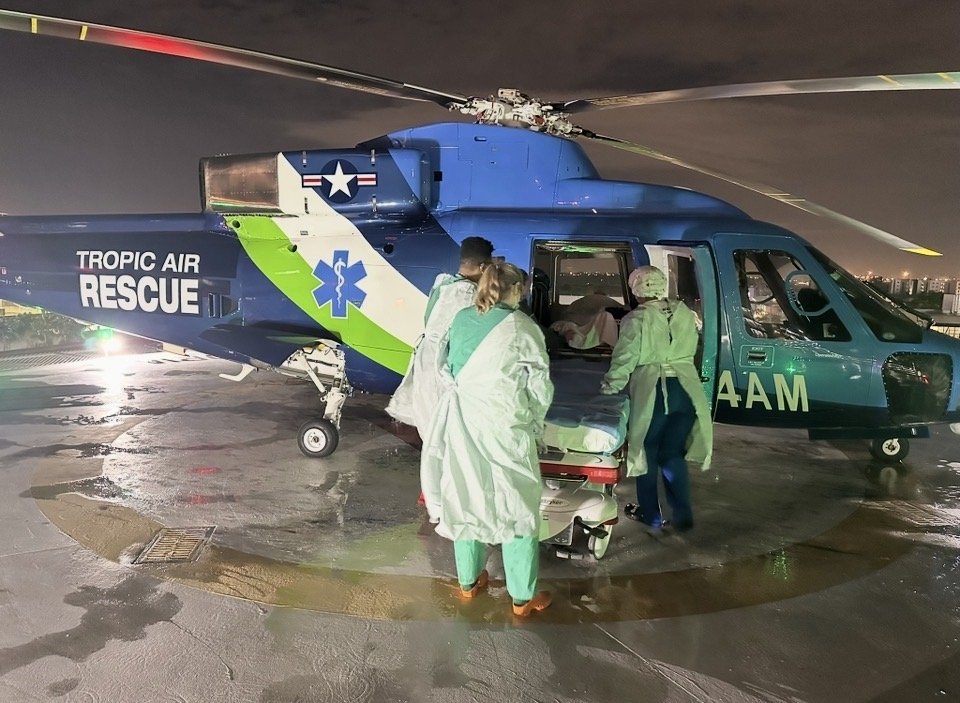
In a critical trauma situation, the distance between a remote Bahamian island and a Florida surgical suite is measured in minutes, not miles. Executing a successful patient transfer to Florida trauma centers requires more than just speed; it demands a sophisticated understanding of international logistics and medical protocols. You likely recognize that the fear of navigating customs, coordinating with elite facilities, and facing prohibitive out-of-pocket costs is often as paralyzing as the emergency itself. Uncertainty regarding remote access or insurance coverage shouldn’t be the barrier to world-class medical intervention.
This strategic guide provides the operational blueprint for a seamless transition, ensuring you bypass administrative delays and technical hurdles. You’ll learn the precise steps for securing rapid helicopter transport to Level I or II facilities while utilizing direct insurance coordination to eliminate financial exposure. We will detail the logistical requirements, the specialized medical capabilities of concierge air rescue, and the specific steps to ensure an immediate, bedside-to-bedside transition. From understanding new 2026 Florida medical regulations to mastering inter-hospital coordination, this is your definitive manual for high-stakes medical repatriation.
Key Takeaways
- Identify the specific high-acuity injuries and clinical criteria that mandate an immediate transition to Florida’s Level I or II trauma facilities.
- Learn the precise coordination protocols required for a seamless patient transfer to Florida trauma centers, ensuring direct communication between referring and receiving physicians.
- Discover why helicopter transport is the superior choice for accessing remote Bahamas locations that lack the infrastructure for fixed-wing aircraft.
- Understand how centralized transfer centers facilitate immediate hospital acceptance and prepare surgical teams before the aircraft even departs the Bahamas.
- Explore how a membership-based model utilizes direct insurance billing to eliminate financial friction and prevent high out-of-pocket expenses during a crisis.
Criteria for Patient Transfer to Florida Trauma Centers
Inter-hospital transfer for high-acuity trauma isn’t just a simple transport. It’s a strategic shift of a critically injured patient from a facility with limited resources to one capable of definitive surgical intervention. In the Bahamas, local clinics often provide essential stabilization, but they lack the specialized surgical teams found in South Florida. Standardized Trauma center levels and designations dictate which facility can manage specific injuries. A patient transfer to Florida trauma centers becomes necessary when the complexity of the injury exceeds local capabilities.
Clinical decisions rely on Advanced Trauma Life Support (ATLS) protocols. This framework helps physicians identify life-threatening injuries early and prioritize intervention. If a patient presents with multi-system trauma, the decision to initiate a transfer happens immediately after the primary survey. Time isn’t just a factor; it’s the primary metric for survival.
Determining the Level of Care Required
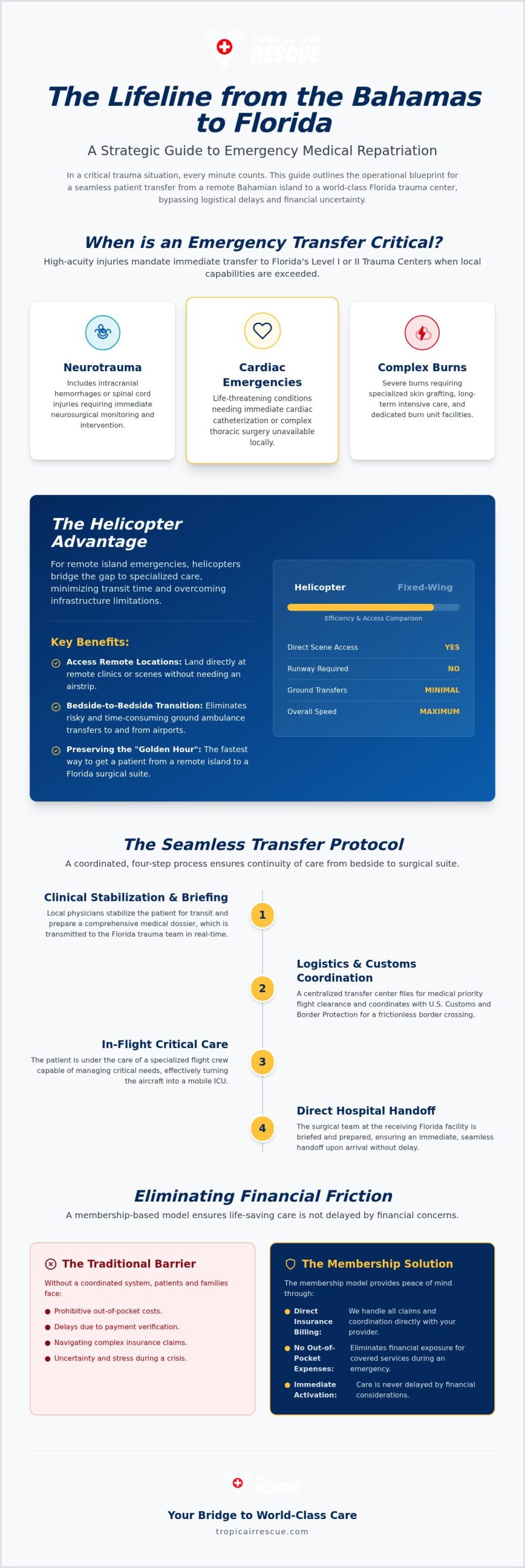
Local stabilization focuses on airway management and hemorrhage control. Definitive care requires specialized infrastructure. Florida’s Level I and II facilities provide round-the-clock access to specialists that remote island clinics can’t maintain. Specific conditions requiring immediate Florida-based intervention include:
- Complex Burns: Requiring specialized skin grafting and long-term intensive care.
- Neurotrauma: Including intracranial hemorrhages or spinal cord injuries that need neurosurgical monitoring.
- Cardiac Emergencies: Needing immediate catheterization or thoracic surgery.
Standardized clinical judgment ensures the patient reaches a facility that matches their acuity level without unnecessary delays. This prevents “secondary transfers,” which waste valuable time and increase patient risk.
The “Golden Hour” in International Transfers
Geographic distance creates a unique challenge for island-based patients. While a boat or fixed-wing aircraft might take hours to coordinate, a helicopter provides a direct line to specialized care. Rapid mobilization is the only way to bridge the gap between a remote scene and a surgical suite. The “Golden Hour” is the critical period for medical intervention following traumatic injury. In an international patient transfer to Florida trauma centers, every minute spent on the ground in the Bahamas reduces the statistical likelihood of a positive outcome. Rapid, concierge-level air rescue minimizes this transit time, ensuring the patient arrives within the window where medical intervention is most effective.
How to Manage an International Medical Repatriation
Repatriating a trauma patient from the Bahamas to the United States is a multi-layered operation. Executing a patient transfer to Florida trauma centers is not a simple flight; it’s a clinical bridge between two distinct healthcare systems. Success depends on synchronized coordination that begins with local stabilization and ends with a definitive surgical handoff. Every step must be executed with precision to maintain the continuity of care across international borders, ensuring no detail is overlooked during the high-stakes transit.
Step 1: Clinical Stabilization and Briefing
Local physicians must conduct rigorous primary and secondary surveys to ensure the patient is hemodynamically stable for transit. Flight introduces unique stressors like changes in atmospheric pressure and vibration that can exacerbate internal injuries if they aren’t managed proactively. The referring facility prepares a comprehensive medical dossier including diagnostic imaging, lab results, and hemodynamic data. This information is transmitted to the Florida trauma team in real-time. It enables them to mobilize specific specialists, such as neurosurgeons or vascular experts, before the helicopter even enters U.S. airspace.
Step 2: Logistics and Customs Coordination
Administrative friction is a significant threat during a patient transfer to Florida trauma centers. Securing flight clearance requires filing plans that request medical priority status to ensure the aircraft receives the most direct routing possible. Coordination with U.S. Customs and Border Protection is equally critical. Emergency medical entry is a specialized protocol that allows for customs clearance to occur without delaying the patient’s arrival at the trauma bay. A concierge provider manages these hurdles behind the scenes. Following Florida’s official trauma transport protocols ensures all legal and medical mandates are met during the transition. While negotiations between major Florida health systems and insurance carriers continue in late 2026, emergency trauma care remains accessible to all patients regardless of current contract status.
Step 3: Execution of the Medical Flight
The aircraft functions as a mobile trauma unit where Advanced Life Support (ALS) equipment provides continuous monitoring of vital signs. The medical crew includes critical care specialists trained in flight physiology who maintain a secure communication link with the receiving trauma center. This allows for live updates on patient status throughout the flight. Upon landing, the team executes a bed-to-bed handoff. This means the flight crew stays with the patient until the Florida surgical team assumes full responsibility. There is no gap in clinical oversight. For those needing immediate coordination, arranging Interhospital Transfer Services provides the necessary logistical support and clinical expertise to bridge the gap between the islands and the mainland.
Selecting the Optimal Transport: Helicopter vs. Fixed-Wing
Choosing the right aircraft is a clinical decision with life-altering consequences. While fixed-wing planes are often associated with long-distance transport, they introduce significant logistical friction in an island environment. For a successful patient transfer to Florida trauma centers, the helicopter is the superior asset. It offers an unbroken chain of care from the point of injury to the hospital rooftop. Fixed-wing missions require airport coordination, fueling stops at specific hubs, and multiple patient handoffs. Each handoff is a point of risk. A helicopter mission is streamlined; it prioritizes point-to-point speed and clinical stability above all else.
Reaching Remote Island Locations
The geography of the Bahamas is the primary challenge. Many Out Islands don’t have functional runways capable of handling jet-powered medical aircraft. Even where runways exist, they’re often miles away from the local clinic. This creates a “double-transfer” scenario. The patient must be moved from the clinic to an ambulance, then from the ambulance to the plane. At the arrival end, the process repeats. Helicopters eliminate these extra steps. They land on grass, gravel, or pavement directly adjacent to the medical facility. For a comprehensive understanding of the logistics, medical advantages, and precise coordination required for a Bahamas to Florida helicopter transfer, our detailed guide covers everything from point-to-point speed advantages to securing a plan that ensures you’re never left without access to care. For a deeper look at these operational differences, see our analysis of Helicopter vs Fixed Wing Medevac: The Critical Choice for Bahamas Emergencies in 2026. This level of direct access is vital for meeting Florida’s official trauma transport protocols, which emphasize the need for the fastest possible route to definitive care.
Hospital-Grade Care at High Altitudes
A modern medical helicopter is a compact, high-tech trauma bay. It’s equipped with the same Advanced Life Support (ALS) technology found in Level I facilities. Onboard systems include invasive pressure monitoring, transport ventilators, and specialized cardiac equipment. The environment is sterile and strictly controlled. The flight crew is composed of elite critical care nurses and paramedics. These professionals are trained to manage high-acuity patients in the unique environment of an aircraft. They don’t just monitor the patient; they provide active intervention. This includes managing complex medication infusions and adjusting respiratory support in real-time. Understanding the full scope of what a high acuity medical flight entails — from mobile ICU equipment to elite crew protocols — clarifies why this standard of airborne care is essential for patients requiring definitive intervention. The medical crew also utilizes state-of-the-art avionics to navigate weather patterns, ensuring a smoother flight. This proactive approach ensures the patient arrives at the Florida trauma bay in the best possible condition. It bridges the gap between the remote island scene and the advanced surgical infrastructure of the mainland.
Coordination Protocols with Florida Receiving Facilities
Coordination ensures a patient doesn’t arrive at a closed door. It’s a synchronized briefing that begins the moment a transfer is requested. Centralized hubs act as the central nervous system for these operations, connecting flight crews with trauma surgical teams in real-time. This process isn’t just about booking a bed; it’s about securing a specialized surgical team that’s ready to operate the moment the aircraft touches down. While large health systems maintain internal transfer centers, they often lack the specialized expertise to manage the international interface from the islands. A concierge medical provider bridges this gap, acting as the primary liaison between the Bahamian facility and the Florida hospital to ensure a seamless patient transfer to Florida trauma centers.
Securing an Accepting Physician
You cannot move a high-acuity patient without a confirmed accepting physician. This is a strict legal and clinical requirement for any inter-hospital transfer. The transfer center analyzes the patient’s specific needs, such as neurosurgery or complex cardiac intervention, and identifies a facility with immediate capacity. They don’t just find a hospital; they find a doctor who will assume responsibility for the patient’s care upon arrival. This prevents dangerous diversions and ensures the patient goes directly to the most appropriate facility. For a deeper understanding of these administrative requirements, review our Guide to Coordinating Inter-Hospital Medical Transfers. This proactive matching process is what separates elite air rescue from standard transport services.
Real-Time Data Transmission
Modern medevac is a data-driven enterprise. En-route to Florida, the medical crew transmits live vital signs and high-resolution diagnostic images directly to the receiving specialists. This allows the trauma team to review the case before the patient even enters U.S. airspace. They can prepare the operating room, mobilize specific blood products, and brief the anesthesia team based on real-time data. This level of preparation is essential for a successful patient transfer to Florida trauma centers. It effectively minimizes the “handoff gap,” which is the period of vulnerability when care is transferred between medical teams. By the time the helicopter lands on the hospital rooftop, the surgical team is already fully briefed. This seamless chain of command improves patient outcomes by eliminating redundant assessments in the trauma bay. If you require immediate assistance with high-acuity coordination, our Interhospital Transfer Services provide the elite logistics and clinical expertise needed for these high-stakes missions.
Eliminating Financial Friction through Membership
The clinical success of a patient transfer to Florida trauma centers shouldn’t be overshadowed by subsequent financial distress. In late 2026, the cost of a private international air ambulance from the Bahamas to Florida often exceeds $50,000. For patients in remote Out Island locations, these costs can surpass $100,000. These figures represent a significant barrier to care for those without a proactive plan. A membership model replaces this high-stakes uncertainty with a structured, logistical guarantee. It ensures that the primary focus remains on medical intervention rather than administrative or financial hurdles. By securing an Annual Membership or a Short-term Membership before an emergency occurs, you establish a direct line to elite medical repatriation assets.
This “concierge” approach to medical safety is designed for residents, second-home owners, and frequent travelers who require a higher standard of preparedness. While traditional travel insurance often contains restrictive “medical necessity” clauses that delay transport, a dedicated membership prioritizes the patient’s immediate clinical needs. It positions the provider as a vigilant guardian, ready to mobilize at a moment’s notice to bridge the gap between the islands and Florida’s advanced medical infrastructure.
No Out-of-Pocket Costs Explained
The financial architecture of the membership model is designed to eliminate the burden of direct patient invoicing. When a member requires a patient transfer to Florida trauma centers, the organization handles the entire billing process. This includes direct coordination with health insurers to secure reimbursement. The organization accepts the insurance payment as full compensation for the flight, effectively shielding the member from the massive out-of-pocket expenses typically associated with international medevac. Membership ensures no surprise invoices follow a life-saving flight. This transparency is a cornerstone of the service, providing financial predictability during a medical crisis.
Concierge Support for Families
A medical emergency involves more than just a flight; it requires managing a complex web of administrative tasks. Concierge support means that while the medical crew focuses on the patient, a dedicated logistical team manages the paperwork, customs clearances, and hospital coordination. This comprehensive oversight extends to other time-critical needs, such as Organ Transport and B2B Membership Plans for corporate groups or resorts. This level of meticulous preparedness provides peace of mind for residents across the Bahamas. It ensures that regardless of the location or the hour, a sophisticated medical solution is always standing by. By removing the friction of financial and administrative coordination, families can focus entirely on the recovery of their loved ones.
Secure Your Medical Future in the Bahamas
Navigating a critical medical emergency in the islands requires more than just hope; it demands a pre-coordinated tactical plan. You’ve seen how helicopter transport eliminates the logistical friction of remote locations and how specialized protocols ensure you reach the right surgical team during the critical “Golden Hour.” Managing a successful patient transfer to Florida trauma centers is a complex operation that leaves no room for administrative delay or financial uncertainty. By shifting from a reactive stance to a proactive membership model, you ensure that elite medical assets are always standing by for your family.
Our Advanced Life Support (ALS) fleet and 24/7 concierge medical coordination are designed to bridge the gap between remote island clinics and Florida’s premier trauma bays. We eliminate out-of-pocket friction through direct insurance billing for our members, ensuring your focus remains entirely on recovery rather than surprise invoices. Don’t wait for a crisis to define your medical options. Secure your peace of mind with a Tropic Air Rescue membership today. Professional preparedness is the ultimate safeguard for your health and your family’s safety.
Frequently Asked Questions
How do I initiate a patient transfer to a Florida trauma center?
Contact a concierge air rescue provider immediately to begin the coordination process. The provider acts as the primary liaison between the referring physician in the Bahamas and the receiving Florida facility. They manage the clinical intake, verify bed availability, and secure an accepting physician through centralized systems. This ensures all medical and administrative requirements are met before the aircraft departs, providing a seamless transition for the patient during a high-stakes crisis.
Is a medical helicopter faster than a fixed-wing plane for Bahamas transfers?
Yes, helicopters are significantly faster for point-to-point missions from the Bahamas. They eliminate the need for ground ambulance transfers to and from regional airports. By landing directly at local clinics or the scene of an injury, helicopters bypass the delays associated with runway logistics and secondary patient handoffs. This direct access is critical for a time-sensitive patient transfer to Florida trauma centers where every minute impacts the clinical outcome.
What insurance plans cover international medical repatriation to Florida?
Most major private health insurance plans include provisions for emergency medical evacuation, though specific coverage limits vary. Membership programs bridge the gap by billing these insurers directly and accepting the reimbursement as full payment. In late 2026, even during ongoing negotiations between major Florida medical systems and insurance carriers, emergency trauma care remains a covered necessity. A successful patient transfer to Florida trauma centers relies on this seamless financial coordination to prevent surprise out-of-pocket expenses.
Can a helicopter land at a remote location without a runway?
Helicopters are specifically utilized for their vertical takeoff and landing (VTOL) capabilities. They can access remote beaches, gravel lots, or small clinic yards that are completely unreachable by fixed-wing aircraft. This capability is essential in the Out Islands, where infrastructure is often limited or damaged. It allows for a continuous chain of care from the point of injury directly to the hospital rooftop without intermediate ground transport or secondary handoffs.
What medical equipment is available on a Tropic Air Rescue flight?
Every mission utilizes an Advanced Life Support (ALS) configuration designed for high-acuity care. Onboard equipment includes transport ventilators, invasive cardiac monitors, infusion pumps, and a comprehensive suite of emergency medications. This setup mirrors a hospital trauma bay, ensuring that patients receive continuous critical care during the flight. The medical crew consists of elite flight nurses and paramedics trained to manage complex clinical interventions at high altitudes and during transit.
Are there short-term medevac memberships for Bahamas tourists?
Short-term memberships are available and specifically designed for travelers and seasonal visitors. These plans provide the same no out-of-pocket benefits as annual memberships for a set duration, such as a week or a month. They ensure that tourists have immediate access to elite repatriation services without the high costs of a standard private air ambulance. This proactive step provides peace of mind for those visiting remote island destinations during their stay.
What happens if a Florida trauma center is at full capacity?
Centralized transfer centers manage hospital-to-hospital logistics by monitoring real-time capacity across the entire Florida medical network. If a specific Level I center is at capacity, the coordination team identifies the nearest appropriate Level II facility with available specialized surgeons. This ensures the patient is never diverted mid-flight and always reaches a facility capable of providing definitive care. The flight crew maintains constant communication to confirm the final destination before landing.
How long does the international customs clearance take for medical flights?
Emergency medical flights receive priority status, allowing for rapid customs clearance through specialized protocols. The concierge team coordinates with U.S. Customs and Border Protection while the aircraft is still en route from the Bahamas. This proactive approach ensures that administrative processing occurs simultaneously with clinical care. In most cases, this results in immediate clearance upon landing at the hospital helipad, allowing the patient to move directly to the trauma bay.