

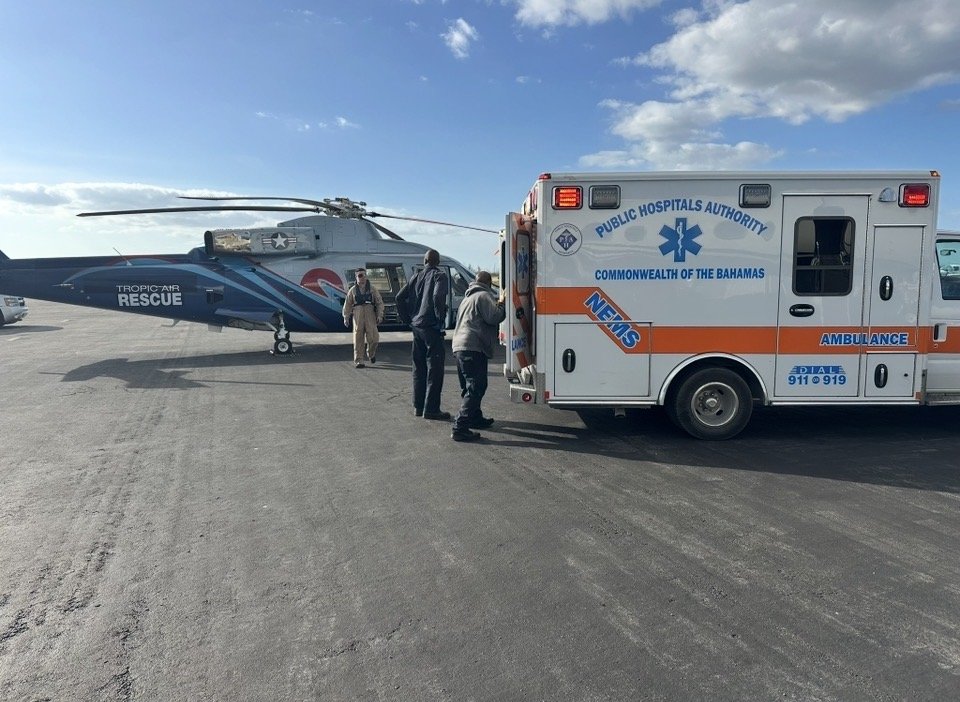
A standard travel insurance policy is not a rescue strategy; it’s a reimbursement form that arrives far too late. You already know that the most pristine dive sites in The Bahamas are also the most isolated. When a decompression incident occurs miles from the nearest runway, the distance between you and a hyperbaric chamber can feel like an impossible gap. Relying on luck or a slow boat isn’t just stressful, it’s dangerous. You need a proactive emergency medical plan for scuba divers that prioritizes speed and logistical precision over paperwork.
This article shows you how to secure a logistical and financial safety net that guarantees rapid helicopter evacuation from remote dive sites. We’ll explain how to eliminate the fear of massive out-of-pocket medevac costs and clarify the confusion between travel insurance and actual rescue logistics. You’ll learn how specialized memberships provide access to helicopter rescue where planes cannot land and ensure guaranteed transport to a Florida trauma center. We are moving beyond basic coverage to establish a professional standard of care that keeps you protected in the water. This is about securing peace of mind through elite preparation.
Key Takeaways
- Recognize why standard travel insurance falls short in high-acuity scenarios and why a dedicated emergency medical plan for scuba divers is a life-saving necessity.
- Understand the logistical advantages of helicopter evacuation for remote sites where fixed-wing aircraft cannot land.
- Discover how membership models eliminate $50,000 out-of-pocket medevac costs through direct health insurance billing.
- Identify critical 2026 safety components, including pre-arranged coordination with elite Florida trauma centers for immediate care.
- Learn how to secure a logistical safety net that provides rapid, point-to-point transport from the water to specialized medical facilities.
The Critical Need for a Scuba-Specific Emergency Medical Plan
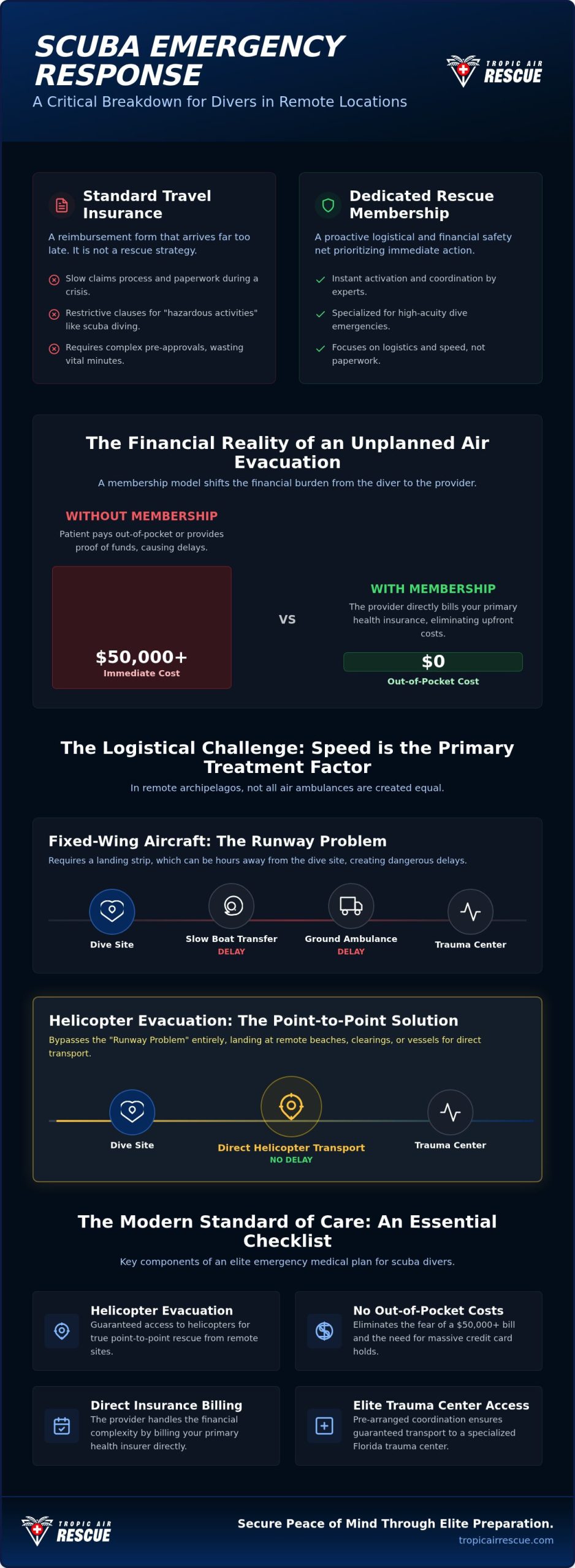
Standard travel insurance is often an administrative hurdle when time is the only currency that matters. A diving emergency demands immediate action, not a call center queue. The Critical Need for a Scuba-Specific Emergency Medical Plan is defined by the logistical bridge between a remote dive site and definitive care. In high-acuity scenarios, the “Golden Hour” is not a suggestion; it’s the physiological limit for effective treatment of Decompression Sickness (DCS). Relying on general travel coverage in the remote island chains of The Bahamas is a high-stakes gamble. These policies often contain restrictive clauses for “hazardous activities” or require complex pre-approvals that waste vital minutes.
The logistical gap between a dive boat and a hyperbaric chamber is often underestimated. In remote regions, traditional ground or sea transport is too slow for neurological emergencies. Fixed-wing aircraft require established runways, which are often hours away from the actual dive site. This creates a dangerous “dead zone” where the patient is vulnerable. Elite air-medical plans solve this by utilizing specialized helicopter assets. These aircraft land directly at the site or on the nearest available clearing, bypassing the need for secondary ground transfers. This precision is the hallmark of a professional safety net.
Decompression Sickness and Barotrauma Risks
Arterial gas embolisms and severe DCS require immediate intervention. Most remote island clinics are equipped for primary care, not specialized hyperbaric medicine. They lack the advanced life-support systems required to stabilize a diver during a high-stakes transport. Specialized air-medical services fill this gap by providing hospital-grade equipment in a mobile environment. Speed is the primary treatment factor. Without it, the risk of permanent neurological damage increases every minute you remain at sea level. Professional rescue teams maintain an “always ready” posture, ensuring that the transition from a dive boat to a medical facility is seamless and disciplined.
The Financial Reality of Unplanned Air Evacuation
The economics of a rescue are staggering. Data from 2026 indicates that an air ambulance evacuation from a remote site can exceed $50,000. Most insurance policies operate on a “reimbursement” basis. This forces the patient to provide immediate payment or proof of funds before the aircraft even departs. For many, this results in massive immediate debt or, worse, delayed care. An emergency medical plan for scuba divers that utilizes a membership model fundamentally changes this dynamic. It shifts the burden of coordination and payment from the diver to the provider. By facilitating direct billing to your primary health insurer, these elite plans eliminate the need for massive credit card holds during a crisis. This concierge approach ensures that your focus remains on recovery, while the logistical and financial complexities are handled by experts.
Evaluating Logistics: Helicopter vs. Fixed-Wing Evacuation
Most divers assume that any air ambulance is sufficient for an emergency. This is a dangerous misconception. Fixed-wing aircraft have a fundamental limitation: they require a runway. In the remote island chains of The Bahamas, the nearest landing strip might be fifty miles from your dive boat. This creates a logistical bottleneck. You’re forced to coordinate a slow boat transfer followed by a secondary ground ambulance ride. Every transition introduces friction and delay. When you’re building an emergency medical plan for scuba divers, you must prioritize assets that eliminate these extra steps. Helicopters are the only vehicles capable of providing a true tactical response to a dive site.
The 2026 standard for dive rescue focuses on minimizing “off-platform” time. Advanced avionics now allow for all-weather response and precision navigation to exact GPS coordinates in the water. Ensuring access to specialized medical treatment for dive injuries requires a logistical engine that moves as fast as the emergency itself. Securing a concierge membership ensures these specialized helicopter assets are dispatched immediately without the need for runway coordination or ground ambulance staging.
Remote Location Landing Capabilities
Helicopters provide the unique ability to land on remote beaches, small clearings, or even the decks of sufficiently sized vessels. This capability removes the “Runway Problem” entirely. Instead of moving the patient to the aircraft, the aircraft comes to the patient. This drastically reduces the time between the injury and the start of advanced medical care. Point-to-point transport is the gold standard for dive rescue, providing direct transit from the site of injury to the definitive care facility. By cutting out secondary transfers, you protect the patient from unnecessary physical stress and environmental exposure.
Advanced Life Support (ALS) in the Air
Modern rescue helicopters are essentially flying intensive care units. They carry specialized equipment designed to stabilize critical dive accident victims, including high-flow oxygen, cardiac monitors, and advanced airway management tools. The crew isn’t just a transport team; they’re specialized flight nurses and paramedics trained in the physics of diving injuries. One of the most critical factors is maintaining sea-level cabin pressure equivalent for DCS patients. Flying at altitude in an unpressurized aircraft causes nitrogen bubbles to expand, which can turn a manageable case of “the bends” into a permanent neurological injury. Professional helicopter teams fly at low altitudes or utilize pressurized systems to keep the patient stable during the flight to a Florida trauma center.
Financial Strategy: Membership vs. Out-of-Pocket Costs
Financial readiness is as vital as your regulator. In 2026, the cost of a private medical flight from a remote dive site can easily exceed $50,000. Standard travel insurance operates on a reimbursement model. This means you must provide payment or proof of funds upfront. For many divers, this results in a catastrophic delay. An emergency medical plan for scuba divers built on a membership model removes this financial friction. It ensures that the aircraft is dispatched based on medical necessity, not your credit limit. This is the difference between a reactive insurance policy and a proactive rescue strategy.
Membership is a logistical guarantee. It positions you as a priority client before the crisis occurs. When every second counts, you don’t want to be negotiating with a claims adjuster or searching for a $50,000 credit line. Elite services collect your insurance and identity information in advance. This preparation allows the flight crew to focus entirely on the mission. You aren’t just buying coverage; you’re securing a dedicated spot in an elite response system.
The Direct Billing Advantage
Traditional insurance creates a paperwork wall between you and the trauma center. Membership dissolves this barrier. By coordinating directly with your primary health insurer, the service accepts the insurance payout as full payment for the flight. This “zero out-of-pocket” model is the only way to ensure financial peace during a crisis. It eliminates the need for massive credit card holds or emergency bank transfers. For those who dive frequently or reside in the region, the Annual Air Rescue Membership provides a year-round safety net. This is a proactive investment in your survival.
Short-Term Coverage for Dive Trips
Not every diver requires an annual commitment. Short-term memberships are designed for specific island stays. These plans provide the same elite helicopter access and direct billing benefits for the duration of your trip. You must activate your coverage at least 48 hours before your arrival to account for the standard waiting period. This ensures your protection is active the moment you enter the water. Consult the Short-Term Medevac Guide for Island Travelers 2026 to tailor a plan to your itinerary. A true emergency medical plan for scuba divers is about removing every possible obstacle to rapid care.
Essential Components of a 2026 Scuba Emergency Checklist
A comprehensive emergency medical plan for scuba divers requires more than just a well-maintained oxygen kit. In addition to rapid evacuation logistics, diver preparedness begins with proper training and emergency response skills; you can learn more about advancing your capabilities through professional scuba certification courses. Ultimately, safety demands a verified chain of communication and logistics that functions when local infrastructure fails. For 2026, your safety checklist must include four non-negotiable components: verified access to 24/7 medical dispatchers, guaranteed helicopter assets, pre-arranged trauma center coordination, and established direct billing protocols. Without these, you’re merely hoping for a rescue rather than planning for one. True safety is built on meticulous preparation and the elimination of variables.
Professional dispatchers are the central nervous system of any response. They don’t just answer calls; they coordinate with flight crews and medical directors to triage your condition while the aircraft is in transit. Your plan must also guarantee that the air assets are helicopters capable of landing at remote sites. As established, fixed-wing aircraft are insufficient for point-to-point rescue in isolated island chains. Finally, ensure your provider has pre-verified your health insurance to activate direct billing. This prevents the administrative delays that often occur when hospitals demand financial guarantees before admission. Most elite memberships require a 48-hour waiting period after purchase, so you can’t wait until the emergency starts to build your safety net.
Communication and Response Protocols
Alerting air rescue from a remote vessel requires precise GPS coordination. Modern dispatch systems utilize satellite-enabled tracking to pinpoint your location even when cellular service is non-existent. The coordination between your dive boat and the air-medical team starts the moment the call is placed. You’ll need to provide the crew with clear landing zone information or be prepared for a hoist operation if the terrain is restricted. This level of synchronization is what defines a modern emergency medical plan for scuba divers in 2026. It ensures that the transition from sea level to the flight deck is efficient and disciplined.
Trauma Center Integration
The rescue doesn’t end when the helicopter lands. A seamless handoff to specialized facilities in Florida is the final, critical step. These hospitals are prepared for your arrival before the aircraft crosses the coastline. Flight nurses provide continuous updates to the trauma team, ensuring that surgeons and hyperbaric specialists are standing by. For a detailed breakdown of these operational steps, refer to the Trauma Air Transport in the Bahamas. To ensure you have this elite level of protection, secure your membership before your next descent into the water.
Securing Your Dive Trip with Tropic Air Rescue Membership
Operational readiness is the core of this elite service. In a high-stakes environment, the difference between a successful recovery and a permanent injury often depends on the speed of the initial response. By maintaining a fleet equipped with advanced avionics and life-support systems, the mission is always focused on geographical precision and medical stability. You aren’t just securing a flight; you’re securing an entire logistical engine dedicated to your survival. This is the definitive solution for complex challenges in the maritime sector.
Members receive priority response and access to dedicated helicopter assets equipped with advanced life-support systems. This concierge approach ensures that the logistical burden is handled entirely by aviation and medical experts. By facilitating direct insurance billing, the service removes the financial stress of an emergency, allowing you to focus on a full recovery. To understand the full scope of these specialized capabilities, you can explore the Elite Guide to Concierge Air Medical Service. This is the standard for high-risk maritime activities in 2026, ensuring that you have a private partner that values exclusivity and service.
Getting Started: Your Safety Net
Securing your safety net is a straightforward process designed for immediate integration into your travel plans. Divers can select from a Short-term Membership for specific island stays or an Annual Membership for year-round protection. For organizations, B2B Membership Plans are available to cover dive clubs and charter vessels, ensuring that entire groups are protected under the same elite standard. It’s important to remember that all memberships have a 48-hour waiting period before activation. This requirement underscores the importance of proactive enrollment before you depart for your trip. We invite you to consult with our medical logistics experts to ensure your emergency medical plan for scuba divers is backed by the highest standards of professional medical aviation. Meticulous planning is the only way to guarantee a rapid response in an environment where every second counts.
Secure Your Tactical Safety Net
Establishing a comprehensive emergency medical plan for scuba divers is a fundamental requirement for any serious underwater operation in 2026. You’ve seen that relying on standard travel insurance or fixed-wing aircraft creates a dangerous gap in care during the “Golden Hour.” Helicopters provide the only tactical solution for remote sites, delivering point-to-point transport that bypasses the limitations of traditional runways. By moving beyond reimbursement models and embracing a concierge membership, you eliminate the administrative friction and financial stress of an unplanned rescue.
Tropic Air Rescue provides the definitive safety net for the region. Our elite service specializes in remote island rescues with an advanced life-support equipped helicopter fleet. We prioritize your recovery by facilitating direct billing to health insurance for members, ensuring that you never face a massive out-of-pocket burden during a crisis. This is about more than just transport; it’s about a disciplined, professional commitment to your survival. Don’t leave your safety to chance when you can secure the most capable logistical partner in the maritime sector.
Secure Your Scuba Emergency Plan with Tropic Air Rescue Membership.
Dive with the confidence that comes from expert preparation.
Frequently Asked Questions
Does standard dive insurance cover the full cost of a helicopter medevac?
Standard dive insurance typically operates on a reimbursement basis, which can leave a significant gap during a crisis. While these policies may cover hyperbaric treatment, they often lack the logistical framework to coordinate immediate helicopter transport. Divers frequently face high out-of-pocket costs or must provide financial guarantees before an aircraft is dispatched. A dedicated membership ensures the aircraft moves based on medical necessity rather than your ability to pay a massive upfront fee.
Can a medical helicopter land directly on a dive boat or remote beach?
Yes, a specialized medical helicopter can land directly on remote beaches or the decks of vessels with sufficient clearance. This capability is the foundation of a robust emergency medical plan for scuba divers. By landing at the site of the injury, the flight crew eliminates the need for slow boat transfers or secondary ground ambulance rides. This point-to-point response saves critical minutes during a decompression incident where every second impacts the final neurological outcome.
How does direct insurance billing work with a Tropic Air Rescue membership?
Direct insurance billing is a core benefit of membership that removes the financial burden from the patient. Tropic Air Rescue collects your insurance information during enrollment and coordinates directly with your provider after a mission. The company accepts the insurance payout as full payment for the transport. This model ensures that members incur no out-of-pocket costs for the flight, preventing the need for $50,000 credit card holds during a medical emergency.
What is the difference between a medical flight and a private charter?
A medical flight is a specialized operation utilizing an aircraft equipped with advanced life-support systems and a professional medical crew. Unlike a private charter, which only provides transportation, a medical flight functions as a mobile intensive care unit. The crew includes flight nurses and paramedics trained in stabilizing high-acuity patients. These aircraft are dedicated solely to medical missions and are not available for non-emergency private charters or standard passenger transport.
Are short-term memberships available for a one-week dive trip?
Yes, short-term memberships are specifically designed for travelers visiting the region for a limited duration. These plans provide the same elite helicopter access and direct billing benefits as annual memberships. You can tailor the coverage to match the exact dates of your island stay. It’s essential to complete the signup process at least 48 hours before your arrival to account for the mandatory waiting period required for all new membership activations.
What happens if I need to be transferred to a trauma center in Florida?
If a patient requires advanced care, the flight crew facilitates direct transport to a specialized trauma center in Florida. The rescue team maintains constant communication with the receiving facility to ensure a seamless handoff. This coordination allows hospital specialists to prepare for the patient’s arrival before the helicopter lands. This integrated approach is a vital component of an emergency medical plan for scuba divers, ensuring that definitive care begins the moment you reach the facility.
Does the helicopter have life-support equipment for decompression sickness?
Yes, the fleet is equipped with advanced life-support equipment specifically suited for stabilizing decompression sickness patients. This includes high-flow oxygen systems, cardiac monitors, and specialized medications. The flight crews are trained in the physics of diving injuries and the importance of maintaining appropriate cabin pressure equivalents. This specialized equipment allows for a higher level of care than what is typically available in remote island clinics or standard transport vehicles.
Is membership required to access Tropic Air Rescue services?
Membership is a mandatory requirement to access the benefits and services provided by Tropic Air Rescue. This model allows the organization to maintain an “always ready” posture with dedicated assets and pre-verified insurance protocols. By securing a membership before an emergency occurs, you ensure that all logistical and financial hurdles are cleared in advance. This proactive approach is the only way to guarantee a rapid, point-to-point response from a remote dive site.