

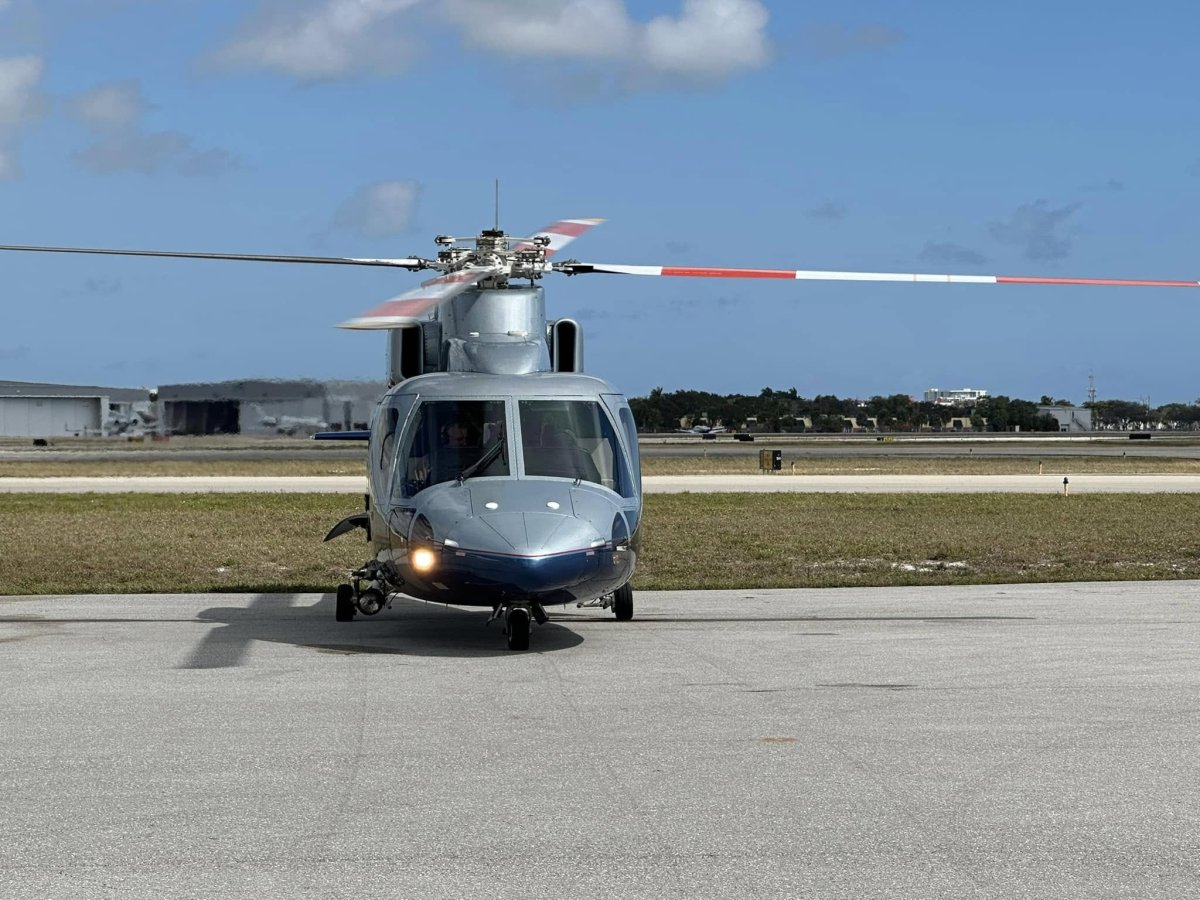
Your premium health insurance often stops at the shoreline, leaving a dangerous gap between a remote emergency and life-saving trauma care. In the Bahamas, a sudden stroke or cardiac event in an isolated location can lead to a logistical nightmare and a bill exceeding $50,000 for a private air ambulance. A specialized medical evacuation membership eliminates this risk by providing a direct link to world-class medical facilities. It transforms a chaotic crisis into a disciplined, professional extraction.
We recognize the anxiety of feeling stranded while navigating complex international flight protocols. This guide provides the clarity you need to secure your safety in 2026. You’ll learn how these memberships guarantee immediate helicopter access and facilitate seamless transfers to US-based trauma centers. We also examine the “no out-of-pocket” billing models that protect your assets. This overview details the essential requirements for ensuring that expert medical intervention is always within reach, regardless of how far you are from the mainland.
Key Takeaways
- Understand why standard travel insurance often fails to cover specialized air transport and how to bridge the gap to world-class trauma care.
- Learn how a medical evacuation membership streamlines emergency logistics by utilizing direct insurance billing to eliminate significant out-of-pocket expenses.
- Discover the critical operational advantages of helicopter rescue, including direct landing capabilities at remote villas, yachts, and island locations unreachable by planes.
- Identify the specific coverage plan that fits your profile, from short-term visitor protection to annual memberships for long-term residents and expats.
- Explore the technical requirements for seamless interhospital transfers, ensuring rapid coordination between Bahamas-based emergencies and Florida trauma centers.
What is a Medical Evacuation Membership?
A medical evacuation membership is a specialized service agreement that secures your access to critical care transport before an emergency occurs. It functions as a logistical safety net that bridges the gap between remote island locations and advanced medical facilities. Unlike standard insurance, which reacts to events after they happen, a membership pre-configures the entire response. It ensures that when minutes matter, the focus remains on clinical intervention rather than financial authorization.
Distinguishing between evacuation and repatriation is vital for any resident or visitor in the Bahamas. Evacuation involves the immediate transport from a remote site to a high-level trauma center. Repatriation refers to the process of returning a patient to their home country once they’re stable. Modern Air medical services have evolved to handle these complex transitions with surgical precision. For those in the Out Islands, the primary concern is the initial evacuation. This is the difference between surviving a cardiac event and succumbing to logistical delays.
Membership vs. Standard Health Insurance
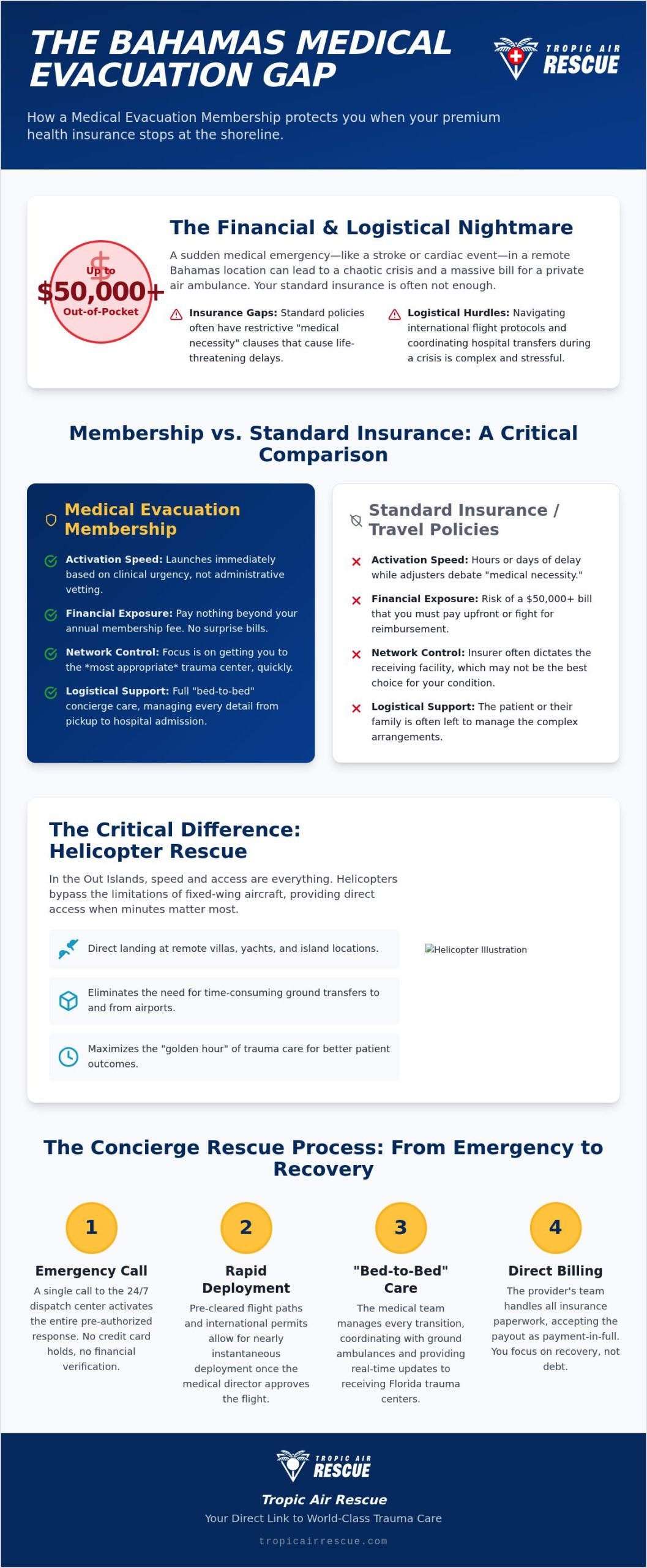
Standard health plans and travel policies often include restrictive “medical necessity” clauses. These requirements can force local physicians to spend hours debating with adjusters while a patient’s condition deteriorates. A membership bypasses this bureaucracy by establishing a “first-call” protocol. Consider these critical differences:
- Activation Speed: Memberships launch based on clinical urgency, while insurance requires administrative vetting.
- Financial Exposure: A private flight from the Bahamas to Florida can cost $50,000 or more; members pay nothing beyond their annual dues.
- Network Control: Insurance often dictates the facility; memberships focus on getting you to the most appropriate trauma center.
The Concierge Air-Medical Model
Elite rescue services operate on a concierge model that prioritizes the patient experience. This isn’t a generic utility transport. It’s a high-stakes operation involving specialized flight nurses, advanced life-support equipment, and meticulous coordination. The “bed-to-bed” care standard means the medical team manages every transition. They coordinate with ground ambulances at both ends of the flight and provide real-time updates to receiving trauma centers. This level of preparedness ensures that the transition from a remote villa or yacht to a US-based hospital is seamless and medically sound. Ultimately, a medical evacuation membership is an investment in certainty for those who value elite, proactive safety.
How Medical Evacuation Memberships Work
A medical evacuation membership functions as a pre-authorized activation system. When a critical event occurs in the Bahamas, the response is immediate. There’s no waiting for financial verification or credit card holds. The process begins with a single emergency call to a 24/7 dispatch center. Medical professionals immediately triage the situation, determining the necessary level of care and flight requirements. This operational efficiency mirrors the high standards of the U.S. Air Force Aeromedical Evacuation System, where logistical precision is the baseline for every mission.
The Logistics of Direct Billing
Members benefit from a sophisticated “assignment of benefits” model. This means the provider accepts the insurance payout as payment in full for the transport. The member is never caught in the middle of a billing dispute. The provider’s administrative team negotiates directly with global insurance carriers. For a deeper look at the professional systems that streamline these healthcare financial operations, learn more about Tausch Medical. They handle the complex paperwork and regulatory filings required for international medical flights. This eliminates the fear of receiving a $50,000 invoice weeks after a life-saving rescue. It’s a concierge approach to medical finance that allows families to focus on recovery rather than debt.
Rapid Deployment Protocols
Success in aeromedical rescue depends on speed and coordination. Specialized providers maintain pre-cleared flight paths and international landing permits for the Bahamas. These protocols allow for nearly instantaneous deployment once the medical director approves the flight. The communication chain is disciplined and constant. Dispatchers synchronize with the rescue team, the patient’s local doctors, and the receiving trauma center in Florida. This ensures that a specialized hospital bed is waiting the moment the helicopter touches down. The entire operation is a sequence of timed events designed to maximize the “golden hour” of trauma care.
The coordination extends to specialized receiving hospitals, such as Level 1 trauma centers in Florida. These facilities are prepared for high-acuity cases like strokes or complex trauma. Every detail, from customs clearance to ground ambulance transfers, is managed by the rescue team. This level of meticulous preparation is why many expats and frequent travelers choose to invest in an annual membership. It replaces uncertainty with a proven, disciplined response system that prioritizes human life above all else. A medical evacuation membership isn’t just a service; it’s a logistical guarantee of world-class intervention.
Helicopter vs. Fixed-Wing: The Critical Difference
Choosing between a helicopter and a fixed-wing aircraft isn’t merely a matter of preference; it’s a clinical decision that dictates the speed of intervention. While fixed-wing planes are suitable for long-distance repatriation, they’re fundamentally limited by runway infrastructure. In the Bahamas, where emergencies often occur on remote cays or private vessels, the ability to land vertically is the only way to bypass significant delays. A medical evacuation membership that prioritizes rotor-wing assets ensures that the medical team reaches the patient’s side directly, rather than waiting at an airport miles away.
The “last mile” problem is a critical failure point in traditional air ambulance models. Fixed-wing transports require multiple transfers. You must move from the scene to a ground ambulance, then from the ambulance to the tarmac, and finally reverse the process at the destination. Each transfer increases the risk of patient instability and adds hours to the rescue timeline. Helicopters eliminate these touchpoints. They provide true Point-to-Point transport by turning a beach, a lawn, or a yacht deck into a temporary helipad. This allows for immediate stabilization and flight without the logistical drag of ground logistics.
Reaching the Unreachable
The geography of the Out Islands demands a platform that can access private villas and remote resorts directly. When a patient suffers a time-sensitive emergency like a stroke, the time saved by landing on-site can be the difference in clinical outcomes. Understanding the specific challenges of medevac for remote resorts is essential for travelers and property managers who want to ensure that seclusion never becomes a liability during a medical crisis. Advanced Life Support (ALS) in a helicopter cabin refers to the provision of high-level medical care, including invasive monitoring and drug administration, delivered by specialized flight crews using portable life-support equipment. This capability ensures that the level of care found in a trauma center begins the moment the patient is loaded onto the aircraft. It’s a sophisticated extension of the hospital’s emergency department, brought directly to your location.
Advanced Avionics and Safety Standards
Operating in a corrosive maritime environment requires rigorous maintenance protocols and advanced technology. Elite services utilize aircraft equipped with high-resolution weather radar and night-vision systems to maintain 24/7 readiness. These tools are essential for navigating the unpredictable tropical weather patterns of the Bahamas safely. Additionally, the flight nurses and paramedics undergo specialized training to perform complex procedures in high-vibration, rotor-wing environments. This level of technical expertise, combined with a medical evacuation membership, provides a tier of safety that traditional travel insurance simply cannot match. It ensures that the aircraft is not just a transport vehicle, but a high-tech clinical environment capable of managing high-acuity patients in any conditions.
Choosing the Right Membership Plan
Selecting the appropriate medical evacuation membership requires a clinical assessment of your lifestyle and risk profile. Not all plans are created equal; a policy that works for a mainland traveler may be wholly inadequate for someone navigating the Out Islands. You must evaluate a provider based on their specific assets, their track record in the region, and their ability to manage high-acuity medical cases. When a stroke or cardiac event occurs, the quality of your plan dictates the speed of the response.
Before enrolling, verify that the service meets these three non-negotiable criteria:
- Geographic Precision: Ensure the provider can land at your specific remote villa, resort, or yacht.
- Medical Acuity Level: Confirm the aircraft is equipped for Advanced Life Support (ALS) rather than just basic medical transport.
- Financial Indemnity: The plan must include a “no out-of-pocket” guarantee through direct insurance billing.
Coverage for International Visitors
Short-term memberships are the ideal solution for tourists, yacht visitors, and seasonal travelers. These plans provide elite protection for the exact duration of your stay in the Bahamas. Standard travel insurance often restricts transport to the “nearest adequate facility,” which may not meet US standards for trauma care. A specialized short term medevac coverage ensures you aren’t just moved to a local clinic, but evacuated directly to a leading Florida trauma center. This provides families with the peace of mind that their safety isn’t dependent on local infrastructure. It also covers inter-island transfers, which are essential if you’re moving between remote cays and require higher-level stabilization before an international flight.
Annual Subscriptions for Residents
For expats and second-home owners, an annual membership is the gold standard of proactive healthcare. It functions as a permanent layer of security that integrates into your long-term living strategy. Residents of the Bahamas understand that local medical resources can be stretched thin; having a “first-call” rescue protocol is a necessity, not a luxury. These plans are also vital for frequent boaters who spend significant time in Bahamian waters. Additionally, B2B and group plans are available to protect corporate teams and resort staff. This ensures that an entire organization has access to the same elite standard of care, maintaining operational continuity during a medical crisis. Understanding how no out-of-pocket air ambulance billing works is essential for residents who want to ensure their membership delivers complete financial protection alongside clinical excellence.
For residents who split their time between the islands and the mainland, comprehensive safety includes property maintenance; for instance, you can learn more about Heroic Roofing to protect your Florida home from storm damage.
Securing your safety shouldn’t be a secondary thought. To protect yourself and your family with a professional rescue protocol, view our membership plans today. Choosing the right medical evacuation membership is the most critical logistical decision you’ll make for your time in the Bahamas.
Tropic Air Rescue: The Concierge Standard in the Bahamas
Tropic Air Rescue defines the concierge standard for aeromedical response in the Bahamas. We operate as a dedicated regional guardian. Our fleet maintains a constant state of readiness. We don’t just react; we prepare. This ‘Always Ready’ posture ensures that our specialized aircraft are positioned to respond to remote cays and private yachts within the golden hour. Our mission is to bridge the gap between isolated emergencies and elite medical intervention. We specialize in the complex coordination required for high-stakes rescues.
Our expertise extends into specialized interhospital transfer services. We facilitate the movement of high-acuity patients from local Bahamian clinics to world-class Florida trauma centers. This process requires more than aviation skill. It demands a deep understanding of international medical protocols and cross-border logistics. We also provide critical care logistics for organ transport, ensuring that life-saving transplants reach their destination with surgical precision. Every mission is an exercise in disciplined execution. Members benefit from our direct billing model, which eliminates the stress of financial negotiations during a crisis.
Elite Interhospital Coordination
Managing the transition between medical facilities is a complex administrative challenge. Our team handles the exhaustive paperwork required for international patient transfers. This includes coordinating with customs, immigration, and receiving hospital administrators in the United States. We don’t simply drop patients at the tarmac. We facilitate direct hand-offs to US-based medical teams at leading trauma centers. This ensures that the continuity of care remains unbroken from the remote rescue site to the trauma center bed. It’s a high-touch, professional service designed for those who require absolute certainty. We manage the logistics so you can focus on recovery.
Securing Your Membership
Protecting your safety in the Bahamas is a straightforward process. Our digital enrollment platform allows for immediate coverage activation. A medical evacuation membership with Tropic Air Rescue is the most effective way to eliminate the logistical and financial risks of island living. Our concierge team provides proactive support, answering pre-travel medical questions and reviewing your specific evacuation needs. This level of meticulous preparation is why we’re the trusted partner for expats, residents, and elite travelers. A medical evacuation membership provides the guarantee that expert help is always a single call away. Don’t leave your safety to chance in a remote environment. Secure your peace of mind with a Tropic Air Rescue membership today. Our team is standing by to ensure you’re never truly stranded.
Secure Your Future in the Bahamas
Survival in a remote emergency depends on the speed of your extraction and the level of clinical care provided during transit. We’ve established that standard insurance often leaves critical gaps in coverage, specifically regarding the high costs and logistical complexity of international air rescue. By choosing a medical evacuation membership, you replace these uncertainties with a disciplined, “always ready” response system. Our Advanced Life Support helicopter fleet ensures you receive hospital-grade intervention the moment we touch down at your remote villa or yacht.
You shouldn’t have to navigate the bureaucracy of international medical transfers during a life-altering crisis. We manage the entire process, from direct billing to your health insurance to expert coordination with leading Florida trauma centers. This concierge approach guarantees that your focus remains on recovery, while we handle the high-stakes logistics of your rescue. Take the decisive step to ensure you and your loved ones are never truly stranded in the Out Islands. Protect your family with a Tropic Air Rescue membership today and experience the confidence of elite, proactive protection.
Frequently Asked Questions
Is a medical evacuation membership the same as travel insurance?
No, a medical evacuation membership is not travel insurance. Standard insurance often restricts transport to the “nearest adequate facility,” which might not meet international trauma standards. A membership provides a logistical guarantee for transport to a hospital of your choice, such as a specialized center in Florida. It bypasses the administrative hurdles of insurance by pre-arranging the flight logistics and clinical coordination before a crisis occurs.
Can a medical helicopter land directly at my private villa or yacht?
Yes, helicopters can land directly at private villas, resorts, or on yacht decks, provided there is a clear and safe landing zone. This vertical lift capability is a critical advantage in the Bahamas, where many locations are inaccessible to fixed-wing aircraft. By landing on-site, we eliminate the need for ground ambulance transfers and airport delays. This ensures that the patient reaches a trauma center as quickly as possible.
How much does a medical evacuation membership cost in 2026?
The cost of a medical evacuation membership is determined by the specific coverage tier and duration you select. Plans are structured to accommodate short-term visitors, annual residents, and corporate groups. While a single emergency flight can exceed $50,000 without protection, a membership provides a fixed-cost solution that eliminates financial surprises. You should review the specific plan details to identify the most cost-effective option for your residency or travel schedule.
What happens if I have a medical emergency and I’m not a member?
Non-members are responsible for the full cost of a private air ambulance, which frequently exceeds $50,000 for international transport. Beyond the financial burden, non-members lack the pre-cleared flight protocols and established coordination with US-based trauma centers. This can lead to dangerous delays in flight activation and hospital admission. Our service ensures that these logistical and financial barriers are removed before an emergency happens.
Does the membership cover transfers to hospitals in the United States?
Yes, the membership specifically covers interhospital transfers to leading trauma centers in the United States, primarily in Florida. We manage the complex international paperwork, customs clearance, and medical hand-offs required for these transitions. This ensures that patients receive continuity of care from the remote rescue site directly to a high-level medical facility. Our coordination team works 24/7 to synchronize with receiving hospitals for immediate admission.
Are there any out-of-pocket costs after the membership fee is paid?
There are no out-of-pocket costs for the emergency flight itself once you are a member. We utilize a no out-of-pocket air ambulance direct billing model that coordinates with your primary health insurance provider. We accept the insurance payout as payment in full for our services, protecting you from balance billing or unexpected invoices. This financial indemnity allows families to focus entirely on medical recovery rather than the logistical costs of the rescue.
Does the membership cover pre-existing medical conditions?
Yes, memberships generally cover emergencies resulting from pre-existing medical conditions. While traditional health insurance may have restrictive clauses regarding prior illnesses, a transport membership is focused on the immediate need for evacuation during an acute crisis. Whether the emergency is related to a chronic condition or a sudden trauma, the priority remains the rapid extraction and transfer of the patient to a facility capable of providing definitive care.
How quickly can a rescue helicopter be deployed after a call?
Rescue helicopters are deployed nearly instantaneously once the medical director approves the flight. Our fleet maintains an “always ready” posture with 24/7 dispatch capabilities. We utilize pre-cleared flight paths and established landing permits to minimize the time between the initial call and the aircraft’s arrival. This rapid response is designed to maximize the “golden hour,” ensuring that critical interventions begin as soon as our medical team reaches your side.