


If a medical emergency happens on a remote island in the Bahamas, will your travel insurance cover care, coordinate transport, or both? The answer depends on your policy. Understanding why you need more than just travel insurance starts with separating financial coverage from the coordination of air-medical transport.
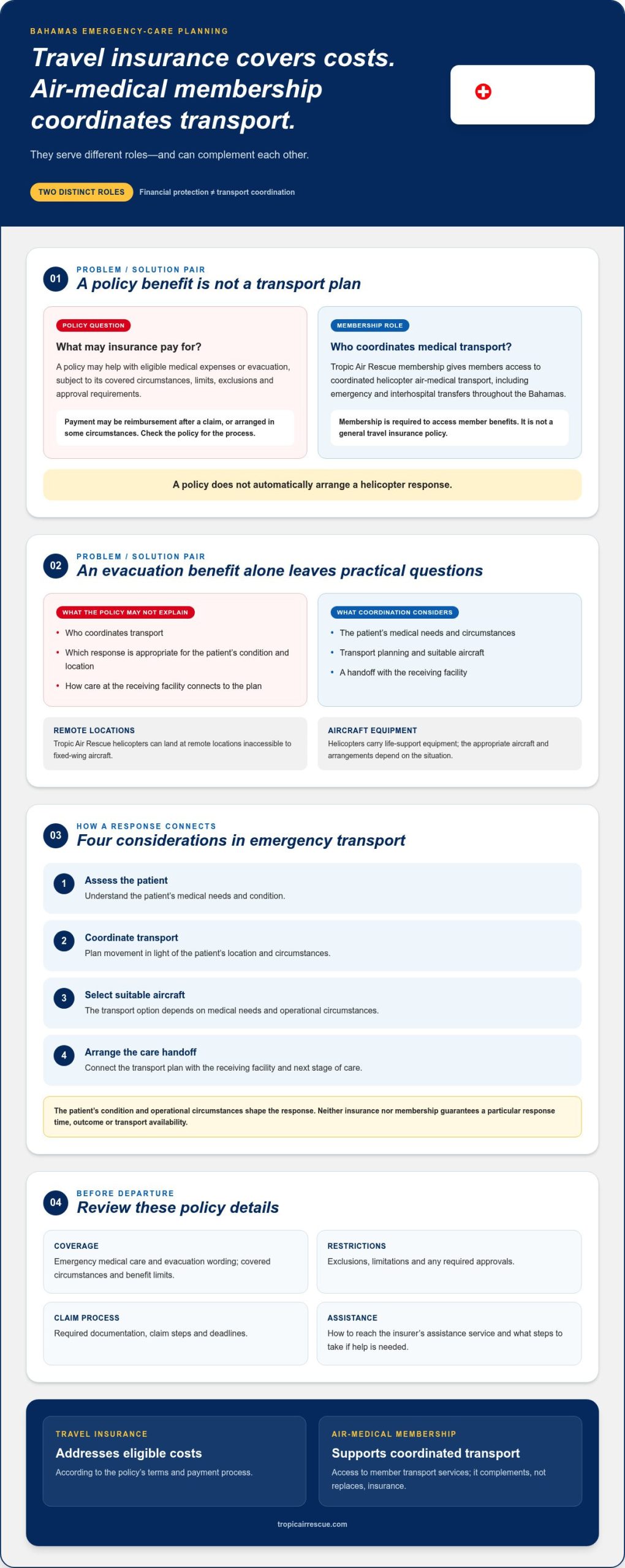
Travel insurance can help with covered medical expenses and evacuation, subject to policy terms. But having a policy doesn’t automatically arrange a helicopter response. Air-medical membership serves a different role: it gives members access to coordinated helicopter medical transport. It complements travel insurance; it doesn’t replace it.
This article explains what to look for in your policy, including how it addresses emergency transport, evacuation destinations, approvals, and reimbursement. You’ll also learn how membership can support a coordinated response when advanced care is difficult to reach, and how to consider short-term or annual membership based on your stay in the Bahamas. Knowing what each option is designed to do can help you prepare.
Key Takeaways
- Understand why you need more than just travel insurance by separating policy benefits from the coordination of emergency air-medical transport.
- Review your policy’s evacuation wording, covered circumstances, exclusions, limitations, and claim steps before departure.
- Recognize that an emergency response involves assessment, transport coordination, aircraft suitability, and handoff to receiving care.
- Compare travel insurance and air-medical membership by purpose, payment pathway, coordination, and the documents each requires.
- Consider short-term or annual Tropic Air Rescue membership based on your anticipated stay in the Bahamas.
Why travel insurance and medical evacuation protection are not the same thing
Travel insurance is an important part of preparing for a trip to the Bahamas. It can provide financial protection for covered events, including certain medical expenses or evacuation. The policy determines what qualifies, what limits apply, and how a claim is handled. An evacuation benefit alone doesn’t tell you who coordinates transport or what response is available.
Air-medical membership serves a different purpose. It gives members access to a specialized service that coordinates emergency or interhospital air-medical transport. The distinction matters in the Bahamas, where a patient’s condition and location can affect which transport is appropriate. Medical Evacuation describes the broader concept of moving a patient to a facility that can provide appropriate care. The practical arrangements depend on the situation.
What travel insurance may help pay for
Medical benefits vary by policy. One plan may cover eligible treatment or evacuation under stated conditions, while another may have different limits, exclusions, or approval requirements. Payment arrangements vary too: a policy may reimburse eligible expenses after a claim, arrange payment in some circumstances, or provide assistance services. Read the policy rather than assuming which process applies.
Before travelling, find the sections on emergency medical care and evacuation. Check benefit limits, exclusions, required approvals, documentation, and claim deadlines. Note how to reach the insurer’s assistance service and what steps to take if you need help. These details clarify what financial support may apply and what you would need to do to seek it.
What an air-medical membership adds
Membership provides access to a transport and coordination service, not another general travel insurance policy. Tropic Air Rescue coordinates helicopter air-medical transport for members, including emergency and interhospital transfers throughout the Bahamas. Its helicopters carry life-support equipment and can land at remote locations inaccessible to fixed-wing aircraft. Membership is required to access member benefits.
Travel insurance addresses eligible costs under a policy; air-medical membership supports access to coordinated medical transport. The two can complement each other, but neither replaces a careful review of your policy or membership terms. In an emergency, the patient’s condition and operational circumstances help determine the appropriate response. Understanding the purpose of each helps you prepare before departure.
How emergency medical evacuation depends on more than a policy benefit
A policy may describe when evacuation expenses could be covered. It doesn’t, by itself, set out the operational steps for moving a patient. An emergency response can involve assessing the patient’s medical needs, coordinating transport, selecting an appropriate aircraft, and arranging a handoff with the receiving facility. Each step connects clinical priorities with practical logistics.
The right plan depends on the patient’s condition, location, and circumstances at the time. A transport option that suits one patient may not suit another. The CDC Guidelines on Travel Insurance and Medical Evacuation explain the distinct roles of travel health and medical evacuation insurance. Payment under a policy and the clinical or aviation coordination needed to move a patient are separate considerations.
Why transport coordination matters in an emergency
An evacuation benefit addresses potential financial coverage under specified policy terms. Coordination addresses how medical needs, transport planning, and the receiving facility fit together. For example, an interhospital transfer involves more than arranging movement between facilities: the patient’s condition and the care required at the destination matter to the plan. The specific operational arrangements depend on the circumstances of the emergency.
This distinction is central to why you need more than just travel insurance. Insurance may help with eligible expenses, while air-medical membership gives members access to coordinated transport services. Neither guarantees a particular response time, outcome, or transport availability.
When helicopter transport can be relevant
In the Bahamas, some locations are difficult to reach by conventional routes. Helicopters can land at remote locations inaccessible to fixed-wing aircraft. Tropic Air Rescue helicopters carry advanced avionics and life-support equipment to support air-medical transport operations. The appropriate aircraft and arrangements still depend on the patient’s needs and operational circumstances.
Tropic Air Rescue also coordinates interhospital transfers. These transfers can support planning for the next stage of care, as appropriate to the situation. For a closer look at aircraft considerations, read the helicopter versus fixed-wing medevac guide.
For an overview of how coordinated transport can complement a policy, see Tropic Air Rescue membership.
Travel insurance versus air-medical membership: compare the roles before you travel
Travel insurance can be valuable protection, but it serves a different role from medical transport coordination. Comparing the two before departure helps clarify what your policy may pay for and what membership is designed to provide. The question is not which one replaces the other, but how their distinct roles may complement each other during a stay in the Bahamas.
| Area | Travel insurance | Air-medical membership |
|---|---|---|
| Purpose | Financial protection for benefits described in the policy. | Access for members to coordinated emergency air-medical transport. |
| Payment pathway | Depends on policy terms and the insurer’s claim process; payment may involve reimbursement, direct payment, or other arrangements. | Tropic Air Rescue bills members’ health insurers directly and accepts insurance payouts as full payment for members. This does not mean every insurer or claim will pay. |
| Coordination | Policy terms may describe assistance services or transport benefits, but the exact arrangements vary. | Supports access to emergency and interhospital helicopter transport coordination for members. |
| Documents to review | Policy wording, benefit limits, exclusions, required documents, and claim steps. | Membership terms and period, alongside your health insurance details. |
Which questions does travel insurance answer?
Read the policy to find out whether emergency medical transport is included, what conditions or limits apply, and whether prior approval is required. Identify exclusions, documentation requirements, and claim procedures before you travel. Check whether the policy describes coordination assistance, payment, reimbursement, or a combination. These details define the insurer’s role, so don’t assume a benefit is automatic.
Which questions does medical membership answer?
Membership addresses a different set of preparation questions: who can access the service, which membership period fits your anticipated stay, and how members connect with emergency air-medical transport coordination. Tropic Air Rescue offers short-term and annual membership options tailored to anticipated length of stay. Membership is required to access member benefits.
For a shorter visit, the short-term medevac coverage guide provides more context. This is why you need more than just travel insurance: a policy may address eligible costs under its terms, while membership supports access to coordinated transport. Review both sets of terms to understand how each fits your preparation.
How to review your travel insurance before relying on it for a medical emergency
Before travelling in the Bahamas, locate the parts of your policy that explain emergency medical care and transport. A benefit name alone may not tell you which situations qualify, how transport is arranged, or what steps you must take to make a claim. A focused review helps you identify what the policy covers and keep essential information ready.
A focused checklist for reading policy wording
Use your insurer’s policy documents and assistance details to find the answers. This is a preparation checklist, not legal or insurance advice.
- Find the relevant sections. Look for emergency medical care, evacuation, medical transport, and assistance services. Check whether each benefit has separate conditions.
- Record the limits and exclusions. Note applicable benefit limits, excluded circumstances, and any rules about pre-existing conditions or other restrictions stated in your policy.
- Check approval and documentation requirements. Look for preauthorization rules, required medical records or receipts, claim submission steps, and deadlines.
- Understand the payment pathway. Identify whether the policy describes reimbursement, direct payment, assistance coordination, or a combination. Note who is responsible for arranging transport under the policy wording.
Save the insurer’s emergency contact details and your policy number. If the wording is unclear, ask your insurer or its assistance service before departure. Keep a copy of the relevant pages somewhere you and a travelling companion can access.
Prepare a clear emergency information file
Keep key information together in a secure, accessible place, with a copy available to a companion. Include:
- Travel insurance policy details and emergency contacts
- Membership information, if you have air-medical membership
- Identification details and emergency contacts
- Relevant medical information, such as known allergies, current medications, and significant medical conditions
Make sure your companion knows where to find the file and how to access it. A concise, current record can help share important information during an urgent situation. For a broader preparation framework, read the international visitor emergency response guide.
Reviewing insurance and organizing records clarifies the financial side of your preparation. Membership can complement that work by giving members access to coordinated air-medical transport. It doesn’t replace travel insurance or change its terms. This is part of why you need more than just travel insurance: financial benefits and operational transport coordination address different needs.
For an overview of membership options, see Tropic Air Rescue membership and compare the short-term or annual period with your anticipated time in the Bahamas.
How Tropic Air Rescue membership complements travel insurance in the Bahamas
Travel insurance and air-medical membership address different parts of emergency preparation. Your policy sets out which expenses may be covered and under what terms. Tropic Air Rescue membership gives members access to coordinated helicopter air-medical transport in the Bahamas. It’s an additional preparation option, not a replacement for insurance or a judgment that your current policy is inadequate.
That distinction helps explain why you need more than just travel insurance: financial protection and transport coordination are separate considerations. A policy may outline eligible evacuation benefits, while membership connects members with a specialized air-medical transport service. Review your policy, then consider whether dedicated coordination is another part of your plan.
Choose a membership period that fits your stay
Your anticipated time in the Bahamas can help guide which membership period to consider. Short-term membership is designed for travelers planning a limited stay. Annual membership may suit people whose expected presence extends beyond a single trip. The appropriate option depends on your plans and the applicable membership terms.
If you’re comparing options for a longer stay, read the annual air rescue membership guide. Membership is required to access member benefits, so review the terms alongside your travel insurance documents as you prepare.
Tropic Air Rescue bills members’ health insurers directly and accepts insurance payouts as full payment for members. This describes the payment arrangement for members; it doesn’t mean every insurer or claim will result in a payout. Your insurer’s policy terms and claim decisions remain relevant, so keep those documents accessible.
Take the next step with a clearer protection plan
Start with your policy. Identify what it says about medical expenses, evacuation, and assistance, then consider whether you also want access to coordinated air-medical transport. This helps you understand the distinct roles without assuming that one form of preparation replaces the other.
Explore Tropic Air Rescue membership to review the options as part of your preparation for travel in the Bahamas.
Build a more complete plan for your time in the Bahamas
Travel insurance and air-medical membership serve distinct purposes. Your policy sets out which medical or evacuation expenses may be covered, subject to its terms. Membership supports access to coordinated helicopter air-medical transport. Understanding why you need more than just travel insurance means reviewing both the financial protection you have and the transport coordination you may want.
Tropic Air Rescue helicopters carry advanced avionics and life-support equipment. For members, Tropic Air Rescue bills health insurers directly and accepts insurance payouts as full payment. Payment still depends on the insurer and the claim, so review your policy wording and keep its emergency contact details accessible.
Consider how long you expect to stay in the Bahamas. Short-term and annual membership options are tailored to anticipated stay length. Comparing the relevant membership terms with your travel insurance can help you decide whether coordinated air-medical transport belongs in your preparation.
Explore Tropic Air Rescue membership to review the options for your stay and take the next step in planning your protection.
Frequently Asked Questions
Is travel insurance enough for a medical emergency in the Bahamas?
It depends on your policy and the kind of support you want. Travel insurance may cover specified medical expenses or evacuation, subject to its terms, limits, and exclusions. It may not describe how air-medical transport is coordinated. To understand why you need more than just travel insurance, review both the financial benefits in your policy and whether you want access to a dedicated transport coordination service.
Does travel insurance cover emergency medical evacuation?
Some travel insurance policies include evacuation benefits, but coverage varies. Check the policy wording for covered circumstances, benefit limits, exclusions, approval requirements, and destination or transport terms. Also find out whether the insurer offers assistance coordination, reimburses eligible expenses, arranges payment, or uses a combination. Don’t assume evacuation is automatically covered just because the policy includes medical benefits. Confirm the relevant details with your insurer before travelling.
What is the difference between travel insurance and air-medical membership?
Travel insurance is financial protection governed by policy terms. It may cover eligible medical or evacuation expenses and may provide assistance, depending on the plan. Air-medical membership gives members access to a specialized transport coordination service. In the Bahamas, Tropic Air Rescue coordinates helicopter air-medical transport and interhospital transfers for members. Membership is not a general travel insurance policy, and it doesn’t replace reviewing your insurance coverage.
Can I have travel insurance and a medevac membership at the same time?
Yes. They serve different roles and can complement each other. Your travel insurance may address covered costs under its policy terms, while air-medical membership supports access to coordinated transport for members. Review both sets of terms to understand their respective benefits and requirements. For Tropic Air Rescue, membership is required to access member benefits. Keep your policy and membership details available during your stay in the Bahamas.
What should I check in my travel insurance policy before travelling?
Locate the sections covering emergency medical care, evacuation, transport, and assistance services. Review benefit limits, covered circumstances, exclusions, preauthorization rules, documentation requirements, and claim steps. Find out how the policy describes payment or reimbursement and who coordinates transport. Save the policy number and insurer’s emergency contact information somewhere accessible to you and a travelling companion. If wording is unclear, ask your insurer or its assistance service before departure.
How does Tropic Air Rescue handle insurance billing for members?
Tropic Air Rescue bills members’ health insurers directly and accepts insurance payouts as full payment for members. Payment depends on the insurer and the handling of the claim, so this should not be read as a guarantee that every insurer or claim will pay. Membership is required to access member benefits. Keep your health insurance information available and review your policy terms alongside the applicable membership details before travelling.
What happens if my travel insurance does not include medical evacuation?
First, review your policy and ask your insurer whether any evacuation benefit or assistance applies to your circumstances. You can still use the policy’s other covered benefits, subject to its terms. If you want dedicated air-medical transport coordination in the Bahamas, consider whether Tropic Air Rescue membership is appropriate for your plans. Short-term and annual options are tailored to anticipated stay length, and membership complements rather than replaces travel insurance.