


Travel insurance and air rescue membership address different needs. A short-term air rescue plan for tourists focuses on emergency medical transport, while travel insurance may cover a broader range of trip risks.
It’s sensible to prepare for both a medical emergency and the wider disruptions a trip can bring. Understand what each option covers, where its limits apply, and whether its terms fit your age, health and itinerary.
This guide compares rescue membership with travel insurance for trips in the Bahamas. You’ll learn what to consider in evacuation limits, repatriation provisions, eligibility rules, age limits and pre-existing-condition exclusions, helping you make a more informed decision before you travel.
Key Takeaways
- Compare evacuation coverage limits and exclusions before deciding whether a policy fits your travel plans.
- Check whether medical repatriation means transport to your home country or to a hospital you choose.
- Separate trip-protection benefits from emergency transport coordination; insurance and rescue memberships serve different roles.
- Review eligibility terms carefully, especially age restrictions and how pre-existing conditions are treated.
- Use your destination, health needs and preferred care arrangements to identify where additional emergency transport support may matter.
Coverage limits for medical and security evacuations
Coverage depends on the policy’s limits, eligible transport and exclusions.
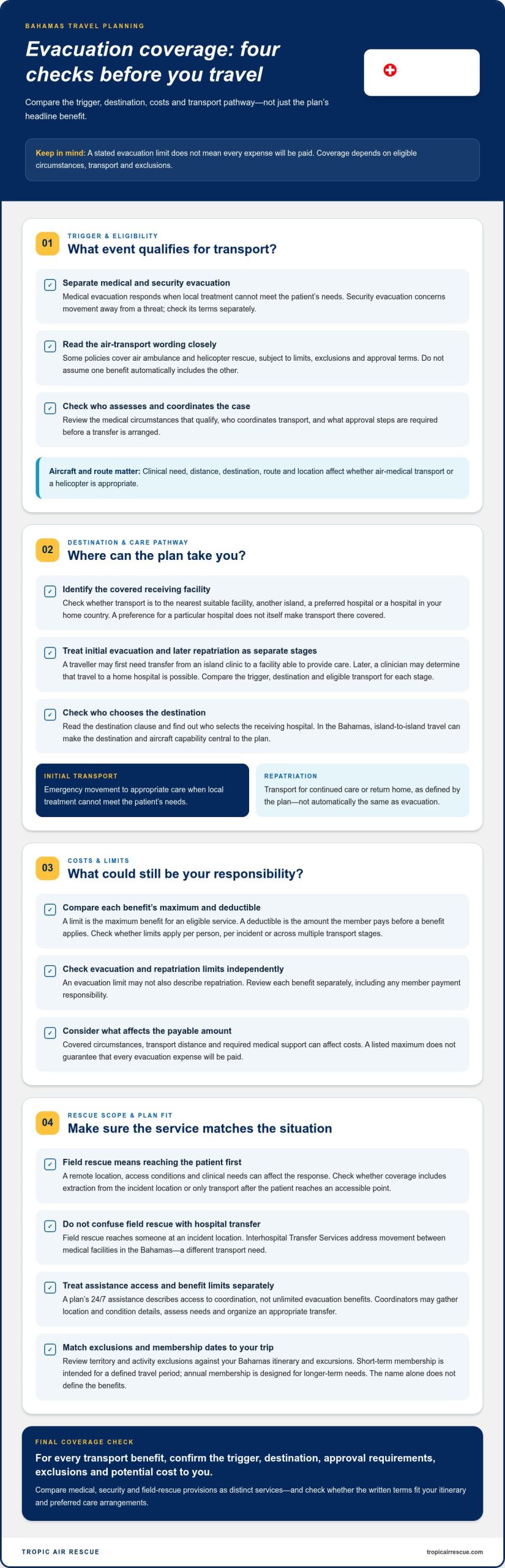
Two details shape the decision: what triggers evacuation and where the plan can take you. Medical emergencies and security incidents may be covered under different terms, so compare them separately.
Medical Evacuation and Air Transport
Medical evacuation arranges transport to appropriate medical care when local treatment cannot meet a patient’s needs. Air-medical transport may use a helicopter when the route or location suits that aircraft. Clinical need, distance and destination all affect the operation.
Does travel insurance include air ambulance and helicopter rescue? Some policies cover these services, subject to their limits, exclusions and approval terms. Read the wording for both air ambulance and helicopter rescue rather than assuming one benefit includes the other.
Check who coordinates transport, what medical circumstances qualify, and whether the destination is the nearest suitable facility or another location. In the Bahamas, island-to-island travel can make the destination and aircraft capability central to an evacuation plan.
Evacuation Costs and Field Rescue
The payable amount depends on covered circumstances, transport distance, required medical support and the policy’s maximum benefit. A limit does not mean every evacuation expense will automatically be paid.
Field rescue adds a separate step: reaching a patient before transporting them to medical care. A remote location, access conditions and the patient’s clinical needs can affect the response. Check whether the wording covers extraction from the incident location or only transport after the patient reaches an accessible point.
Assistance coordination begins with reporting the emergency through the plan’s designated contact channel. Coordinators can gather the patient’s location and condition, assess transport needs and organize the appropriate transfer. If a plan advertises 24/7 assistance, that describes access to coordination, not unlimited evacuation benefits.
What countries and activities are excluded from air rescue coverage? Exclusions vary by plan and appear in its territory and activity terms. Identify destinations and activities outside the coverage, then compare them with your Bahamas itinerary and planned excursions.
For hospital-to-hospital movement within the Bahamas, Interhospital Transfer Services address a different need from field rescue: moving a patient between medical facilities. Knowing the difference helps clarify which transport pathway applies in an emergency.
Medical repatriation and transport to a hospital of choice
Repatriation is not automatically the same as evacuation to the nearest suitable hospital. For a tourist in the Bahamas, it may mean medical transport to another island, a preferred facility or the home country, depending on the plan’s definition. Read the destination clause and identify who selects the receiving hospital. A preference for a particular hospital does not, by itself, mean transport there is covered.
Separate emergency transport from repatriation after initial treatment. A traveller may first need transfer from an island clinic to a facility able to provide the required care. Later, a clinician may determine that the patient can travel to a home hospital. These are distinct stages, and policy wording may treat them differently. Before travel, compare the trigger, destination and eligible transport for each stage.
Security evacuation and medical repatriation address different events. Security evacuation concerns movement away from a threat; medical repatriation concerns transport for continued care or return home. Field rescue is about reaching someone at an incident location, while hospital transfer moves a patient between facilities. For example, a remote-island injury may involve extraction first, followed by a separate decision about medical transport.
Compare membership duration with your itinerary. Short-term Membership is designed for a limited travel period, while Annual Membership is intended for a longer span. Neither name alone explains whether benefits include field rescue, security evacuation, medical repatriation or transport to a chosen hospital. Use the written terms to match each benefit to your trip dates and care pathway.
Limits and deductibles affect what a traveller may have to pay. A limit sets the maximum benefit for an eligible service; a deductible is the amount the member pays before a benefit applies. Check whether limits apply per person, per incident or across multiple transport stages. An evacuation limit may not also describe repatriation, so compare each benefit separately.
- Destination: Identify whether transport is limited to the nearest appropriate facility or includes a home hospital.
- Approval: Note the required steps for authorising medical transport and arranging the receiving facility.
- Costs: Compare each benefit limit, deductible and any member payment responsibility.
- Scope: Distinguish medical, security and field rescue provisions instead of treating them as one service.
For hospital-to-hospital movement in the Bahamas, Interhospital Transfer Services address a different need from repatriation to a home hospital. Understanding the distinction helps travellers identify the relevant transfer pathway and the coverage terms to review.
Travel insurance versus emergency assistance memberships
For tourists in the Bahamas, short-term air rescue coverage generally means emergency transport benefits arranged through a policy or assistance membership. Travel insurance and membership may overlap on evacuation, but they serve different purposes.
Short-Term and Annual Assistance Plans
A short-term membership is intended for a defined trip period; an annual membership is designed for longer-term needs. Compare the coverage dates with your travel schedule, including arrival, departure and separate island stays. Then review whether the assistance benefits apply throughout your Bahamas itinerary.
Duration alone does not explain the protection. Read the terms for eligible emergencies, transport coordination and geographic or activity exclusions. For example, a plan for a short visit may not suit a traveller making several separate trips during the year.
Emergency Medical Evacuation and Transport
Emergency medical evacuation arranges transport when a patient needs care beyond local capabilities. An assistance membership may focus on coordination and transport, while travel insurance can include evacuation as one benefit among broader trip protections. The exact scope is set out in the terms, not the product label.
Compare who can authorize transport, which circumstances qualify and how the destination is selected. In the Bahamas, an island transfer to suitable medical care differs from transport to a preferred facility. Also distinguish emergency medical transport from trip cancellation or baggage benefits.
Planning for Remote Destinations
For remote travel, location details matter in an emergency. Before visiting an out-island or a location far from medical facilities, record your accommodation, route and emergency contact details. The same precautions apply to remote journeys worldwide; for example, travellers coordinating safari lodge transport through Zaf Travel in South Africa also benefit from documenting precise routes and emergency access points. Share your itinerary with your travel companion so they can explain where you are and how to reach you.
Review how the plan handles access to the patient, transport coordination and communication during an emergency. A helicopter may suit some locations or routes, but aircraft choice depends on operational and medical circumstances. Don’t assume a transport benefit automatically covers rescue from every activity or site. Similarly, whether navigating isolated island trails or booking adventurous excursions with Victory Rental & Safaris, confirming that emergency services can operate in off-grid terrain is essential.
Travel insurance typically addresses a wider range of trip-related risks, while emergency assistance membership centres on specified response services. Neither label alone establishes an evacuation limit, deductible or destination entitlement. Compare the actual benefits side by side, including exclusions and coordination steps.
Medical guidance and telehealth are separate from physical evacuation. A remote consultation may help a traveller describe symptoms and understand immediate next steps, but it does not transport a patient to a hospital. Check whether guidance is included and how it connects to emergency transport arrangements.
- Compare: List insurance benefits beside membership services, including evacuation and trip protections.
- Match: Align the membership period with travel dates and destination plans.
- Read: Locate the exclusions for activities, territories and transport destinations.
- Prepare: Keep itinerary and emergency contact details accessible to your companion.
Eligibility, age limits and pre-existing conditions
Eligibility rules, age limits and health exclusions are set by each plan’s terms. Before purchasing, compare the age wording, health questions and trip requirements with each traveller’s circumstances.
What details are needed to buy a short-term air rescue plan? Prepare each traveller’s full name, date of birth, travel dates and Bahamas itinerary. Include any health information requested during enrolment, especially details about existing conditions and current treatment.
Age eligibility can affect who may enrol and which terms apply. A traveller in their late 50s should read the age clause for the specific membership, rather than assume that one rule applies across all plans. Look for age limits at enrolment and any age-related changes to benefits. The wording matters more than a general description such as “for tourists.”
Read the terms on pre-existing conditions carefully. Plans may define them by diagnosis, symptoms, treatment or medical advice before coverage begins. For example, a condition managed with regular medication may be treated differently from a new injury during travel. Read the definition alongside the exclusion. An exclusion can affect whether transport related to that condition qualifies, even if another emergency is covered.
Answer health questions accurately and consistently with the traveller’s medical history. If a doctor recently changed medication or recommended follow-up care, include that information wherever the application asks for it. Keep the enrolment record and relevant policy wording accessible during the trip. Clear records help travellers understand the coverage they purchased.
Use this sequence for each person travelling:
- Identify: Record the traveller’s name and date of birth as requested during enrolment.
- Match: Compare the trip dates and Bahamas destinations with the plan’s eligibility terms.
- Review: Read age limits, pre-existing-condition definitions and related exclusions together.
- Disclose: Provide the health details requested, including relevant treatment or medical advice.
- Retain: Keep the membership confirmation and coverage wording available while travelling.
A short visit and an annual travel pattern may call for different membership periods, but duration does not replace an eligibility review. For example, a traveller with a continuing health condition should assess both the membership dates and condition-related exclusions. Confirm that each traveller is covered individually rather than assuming one enrolment automatically protects companions.
Finally, distinguish eligibility from approval of a future transport request. Enrolment establishes membership under its terms; an emergency request is assessed against the covered event, medical circumstances and applicable exclusions. Review those clauses before departure so you understand how age and health conditions relate to the transport benefits.
Travel insurance compared with rescue membership
For a trip in the Bahamas, travel insurance and rescue membership can address different parts of an emergency. Insurance may cover a wider range of travel disruptions, while rescue membership centres on specified emergency assistance and transport. Compare the actual benefits, exclusions and response process rather than relying on either label to define protection.
A travel insurance policy may combine medical expenses, trip interruption and baggage benefits with evacuation coverage. Each benefit has its own conditions. For example, a policy might cover a cancelled flight but limit evacuation to eligible medical emergencies. Read the benefit schedule and exclusions together to see what triggers each payment or service.
Rescue membership is designed to coordinate a response, such as arranging medical transport when an emergency qualifies under its terms. Those terms determine which events qualify and how transport is managed. This distinction matters in the Bahamas, where an island transfer for medical care is a different need from reimbursement for a disrupted hotel stay.
Consider a traveller who becomes seriously ill during an out-island visit. Insurance may cover eligible medical expenses or other covered trip costs, while membership terms may describe assistance coordination and transport. The traveller may need both. Neither arrangement should be treated as a substitute for the other without comparing their written scope.
Travellers from the United States should also distinguish an assistance service from insurance reimbursement. One may coordinate a response, while a policy may reimburse eligible costs under its terms. The documents explain whether approval is needed, which costs qualify and how claims or assistance requests are handled. Keep contact instructions and policy documents accessible during the trip.
- List the risks: Separate medical transport needs from cancellations, delays and lost baggage.
- Compare benefits: Match each risk to the policy or membership provision that addresses it.
- Read exclusions: Note conditions involving destinations, activities, health history and transport.
- Review the process: Identify how to report an emergency and what documentation each arrangement requires.
Assess the gaps as carefully as the overlap. If both arrangements address evacuation, compare their eligibility rules and coordination steps. If only one covers a particular trip disruption, account for that distinction in your decision. A short trip and an annual travel pattern may also call for different membership periods.
Choose based on the protection you need, not a single headline benefit. For example, a traveller prioritising broader trip protection may value insurance benefits, while someone focused on emergency transport may place greater weight on assistance coordination. Compare the terms side by side before departure and keep the relevant documents ready.
Tropic Air Rescue: Short-term Membership
Tropic Air Rescue offers Short-term Membership for tourists seeking emergency air-medical transport in the Bahamas. It may be a relevant option when your plans call for specialized medical evacuation support rather than broader trip protection, such as cancellation or baggage benefits.
Membership is required to access Tropic Air Rescue’s emergency transport service. For a hospital-to-hospital move, Interhospital Transfer Services address a different need from emergency evacuation. Compare the membership terms with your itinerary and travel insurance to understand how each fits your preparations.
If you travel in the Bahamas regularly, Annual Membership may suit a longer travel pattern. For a short visit, focus on the Short-term Membership and how it fits your trip dates. Visit Tropic Air Rescue to learn more about membership.
Make Your Travel Plan Operational
Before departure, turn your coverage decisions into a practical travel plan. Keep membership details, insurance documents, your itinerary and emergency contacts accessible to your travel companion. This gives everyone a clear starting point if an emergency changes your plans.
A short-term air rescue plan for tourists can form part of your preparations, alongside travel insurance suited to broader trip risks. Choose based on the support you want during your time in the Bahamas and the terms that apply to your circumstances. Tropic Air Rescue offers Short-term Membership for visitors and Annual Membership for longer-term needs. Interhospital Transfer Services address hospital-to-hospital transport.
Your next step is to align your travel dates and priorities with the membership information, then keep the relevant documents ready before travelling. For details about membership options, contact Tropic Air Rescue. A considered plan helps you travel with greater clarity and focus on the experience ahead.
Frequently Asked Questions
Who is the membership for?
Tropic Air Rescue membership is for natural persons seeking emergency air-medical transport while in the Bahamas. Applicants must certify that they aren’t Medicaid beneficiaries. Membership may suit visitors who want access to the air-medical system under its terms. It isn’t an insurance policy, so members must maintain current medical insurance during the membership period and are responsible for costs their insurance doesn’t cover.
What medical evacuation and air ambulance services are covered?
Tropic Air Rescue provides a membership-required helicopter air-medical service for emergency and interhospital transport in the Bahamas. The service also includes organ transport and transportation for people awaiting organ donations. The medical command physician and attending medical professionals determine whether a patient is flown. A hospital transfer and an emergency response from a remote location are different transport situations, assessed according to the patient’s circumstances and service terms.
How much does short-term air rescue insurance for tourists cost?
Membership fees are tailored to the anticipated length of stay in the Bahamas, so a short visit and a longer stay may involve different membership terms. Review the current membership information before purchase. Membership activates 48 hours after purchase, and purchase must be completed at least 2 days before arrival in the Bahamas to ensure coverage.
What are the coverage limits and exclusions for air rescue plans?
Membership eligibility and operational conditions limit the service. Tropic Air Rescue may be unable to fly if aircraft are assigned to another patient, maintenance or equipment limits apply, regulations restrict operations, or the patient’s condition, age or size affects transport. FAA restrictions prohibit most of its aircraft from flying in inclement weather. Membership isn’t insurance, and members are responsible for expenses health insurance doesn’t cover.
How do tourists arrange an emergency air rescue abroad?
Arrange membership before travelling, then keep its details and your medical insurance information accessible. For Tropic Air Rescue, purchase must be completed at least 2 days before arrival in the Bahamas because membership activates 48 hours after purchase. During an emergency, communicate the patient’s location and condition through the service’s contact channel. Medical professionals determine whether flight is appropriate, and operational conditions can affect availability.
Which providers offer short-term air rescue plans for tourists?
Tropic Air Rescue offers Short-term Membership for visitors to the Bahamas, alongside Annual Membership. Membership provides access to its helicopter air-medical system under the stated terms; it isn’t an insurance policy or a substitute for medical insurance. Compare the membership’s eligibility and operational conditions with your travel insurance. For example, a tourist may use insurance for broader trip benefits while considering membership for emergency air-medical transport.